


Berlin’s Christopher Street Day drew roughly half a million people this year, its biggest crowd ever, under the slogan “Taking a stand is hot.” Hours after the march ended, a vehicle plowed into people near the closing celebration in Tiergarten park. One woman was killed. At least 29 people were hurt.
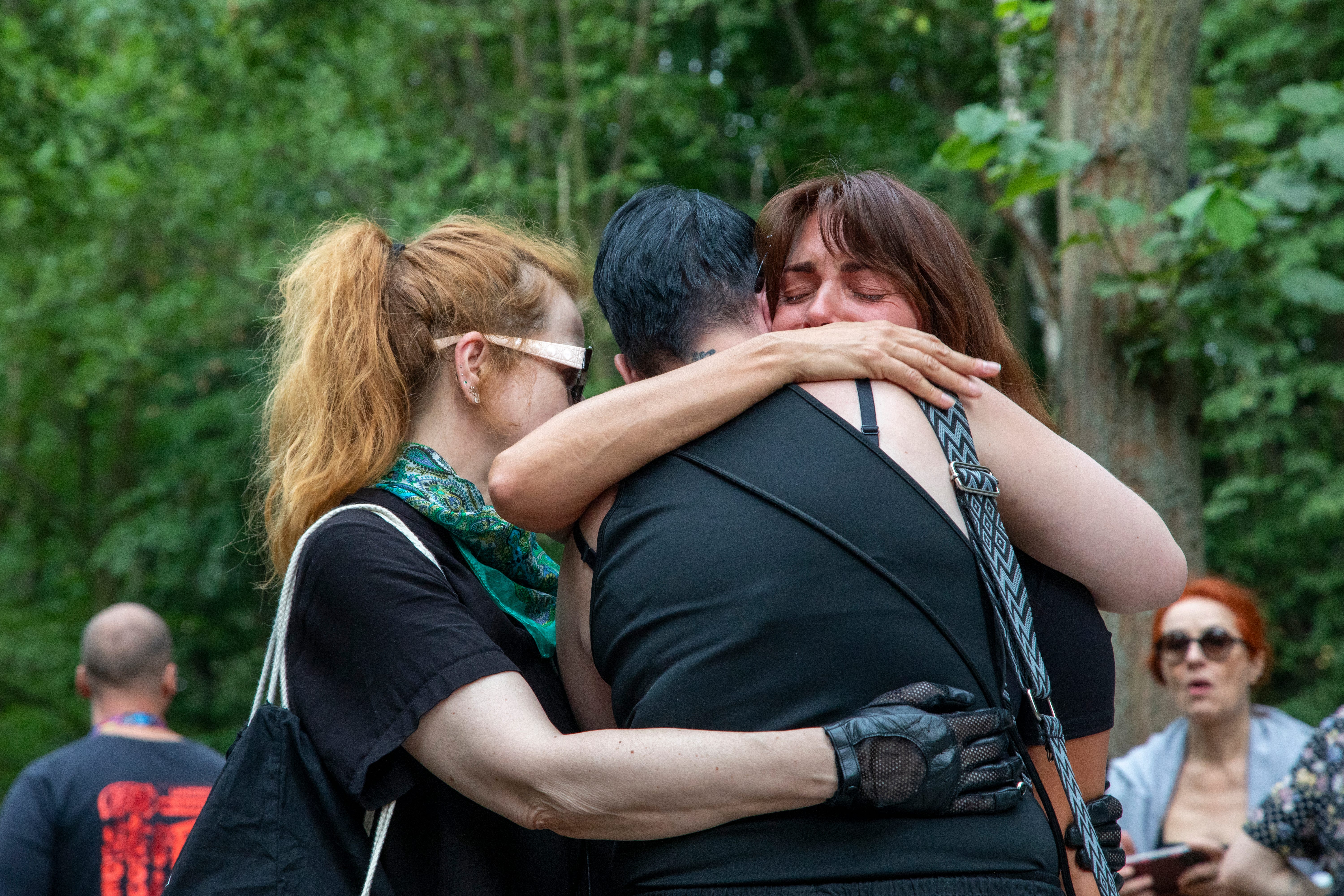
German federal prosecutors are investigating the attack as Islamist terrorism. The suspect, 21-year-old Abdul Ballout, was shot dead by police Sunday evening after a day-long manhunt. On Monday, prosecutors released a second man they had briefly held, saying the theory that he rode in the vehicle “could not be upheld.”
None of that is the detail that should stop you. This is: Ballout had already been convicted, two months earlier, of preparing a serious act of violence and posting ISIS propaganda online. A German court gave him a suspended sentence over prosecutors’ objections. He was free when he drove into the crowd at Pride.
A Vehicle Struck the Crowd as Berlin’s Record Christopher Street Day Wound Down
The attack happened shortly before 10 p.m. Saturday, July 25, near Berlin’s Tiergarten, as the city’s two-day Christopher Street Day celebration was closing out for the night. Organizers estimated close to 500,000 people had marched earlier that day, Berlin’s largest CSD on record. Police gave a more conservative estimate of “several hundred thousand.” The closing stage at the Brandenburg Gate ran late into the evening, capped by an unannounced appearance from singer Sarah Connor.
According to German broadcaster Tagesschau, a vehicle, described by police as a white van, drove along a path through the park and struck several people before crashing into a tree. The driver fled on foot. Investigators are also looking into reports that some victims were wounded with a bladed weapon, which CBS News reported investigators believe was a machete.
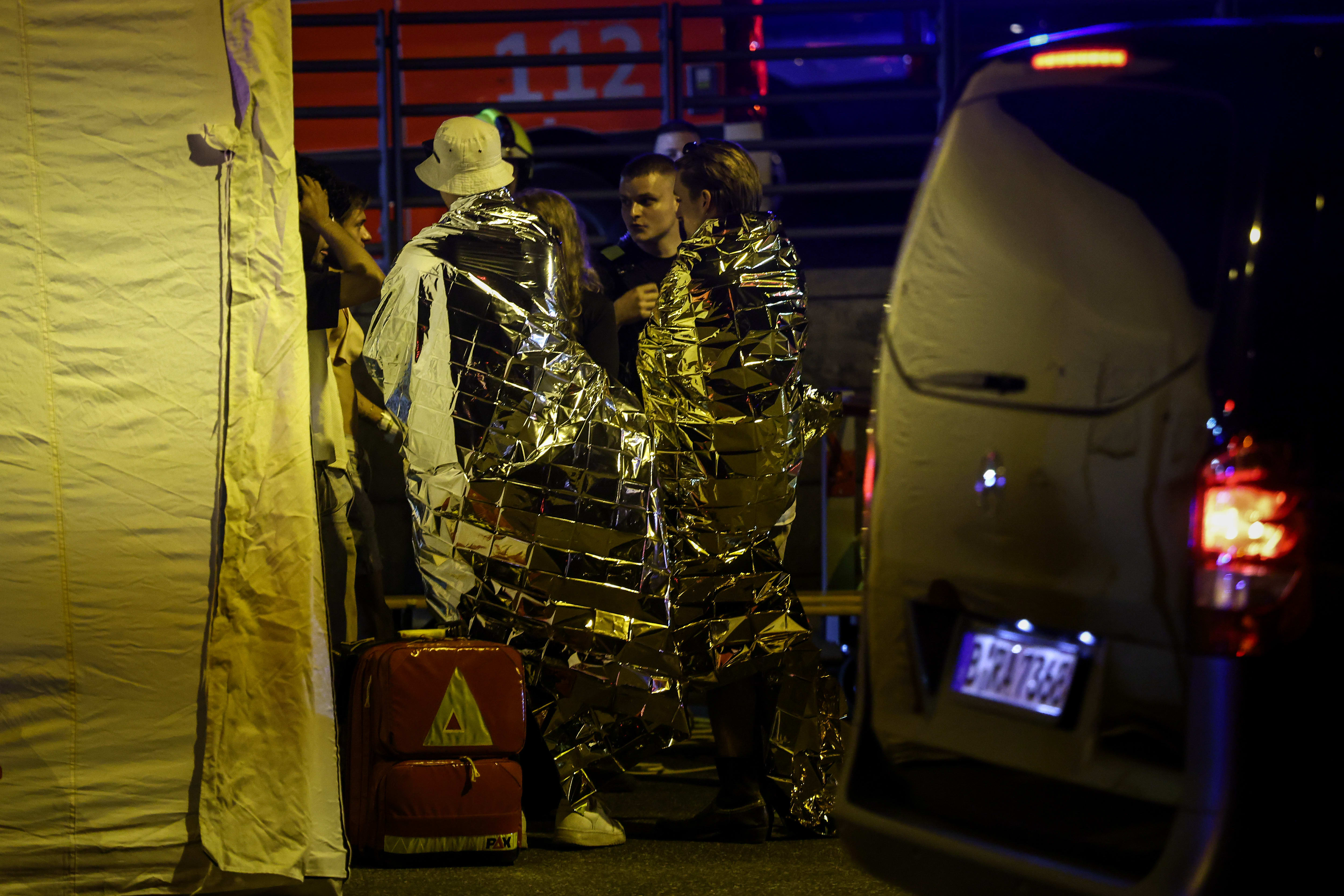
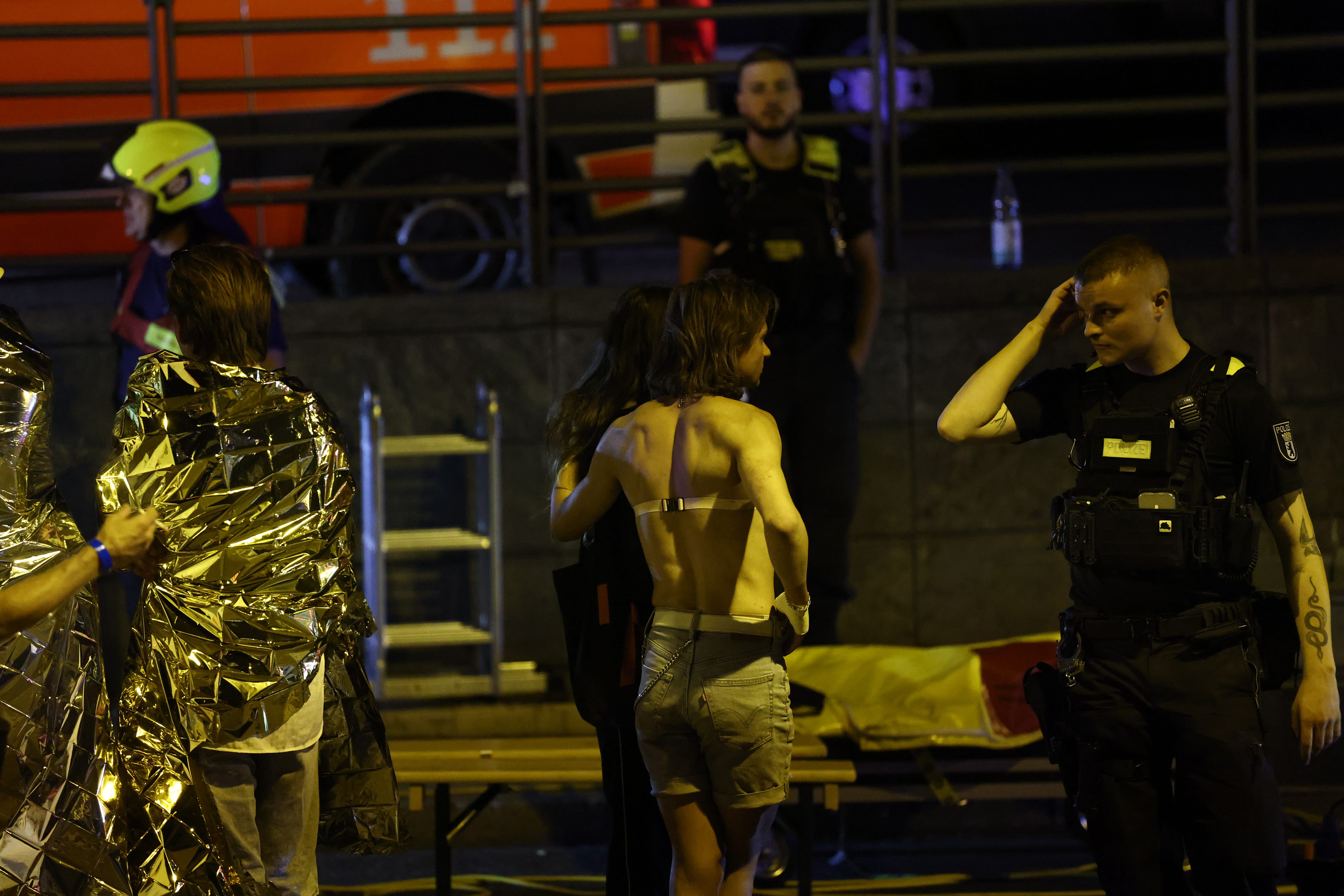
Casualty figures were revised upward through the weekend as authorities completed their assessment. Berlin police now say at least 29 people were injured, and at least 30 witnesses received psychological care at the scene. Officials said Sunday that none of the surviving victims remained in immediate danger of dying, though several had been reported in life-threatening condition the night before. The woman who died has not been publicly identified. Officials have not said whether Ballout chose the crowd because of its connection to CSD, or because it was simply a large public gathering.
Berlin’s Christopher Street Day, like Pride events across Germany, traces its name and lineage to the 1969 Stonewall uprising in New York.
Police Shot Suspect Abdul Ballout Dead After a Day-Long Manhunt in Spandau
Police identified the suspect as Abdul Ballout, 21, a German citizen born in Germany to a mother who was naturalized in 2002, three years before his birth. Investigators said he was known to law enforcement and connected to Berlin’s Islamist scene. Police released a description: 6-foot-2 with black hair, last seen in a black hoodie and white pants, and warned the public not to approach him.
The search spanned nearly 24 hours and reached train stations, airports, and border crossings. Officers located Ballout around 6 p.m. Sunday in an allotment garden complex in Berlin’s Spandau district. Police said he ran toward officers while armed with a bladed weapon, and officers opened fire. Berlin’s fire department attempted resuscitation, but he died at the scene.
Berlin Mayor Kai Wegner called the end of the manhunt “a major success” while continuing to describe the attack itself as “an attack on our free and cosmopolitan society.”
Ballout Was Convicted of Plotting Extremist Violence Two Months Before the Attack
This is the part the first wave of coverage mostly missed. According to court information reported by CBS News and PBS NewsHour, Ballout traveled to Lebanon in 2025 attempting to make contact with people connected to ISIS, intending to reach Syria. He was arrested there and convicted by a Lebanese military court of incitement to religious and sectarian conflict, serving three months.
Back in Germany, a Berlin juvenile court convicted him in May 2026 of preparing a serious act of violence that endangered the state, tied to ISIS propaganda he posted on Instagram. The court gave him a suspended sentence of one year and ten months in youth custody, weighing his time already served and his confession. Prosecutors had pushed for a longer sentence. Ballout was released.
Roughly two months later, he drove into the crowd at Christopher Street Day.
German Interior Minister Alexander Dobrindt told reporters, “Everything we see here indicates that we are dealing with an Islamist terrorist attack.” He has also said Germany will review security at major public events going forward. Neither Dobrindt nor federal prosecutors have said whether the suspended sentence factored into how closely, if at all, authorities were monitoring Ballout before the attack.
A Second Suspect Was Released as Germany’s Investigation Continues
Investigators initially could not rule out that Ballout had help. Witness accounts differed on how many people got out of the vehicle after it crashed, and police searched an apartment without finding him. A second man was briefly detained on suspicion of having been a passenger.
On Monday, July 27, German federal prosecutors released that man, saying the passenger theory “could not be upheld,” according to reporting citing Der Spiegel. Prosecutors said only that they “continue to investigate broadly.” It remains unconfirmed whether anyone assisted Ballout before or during the attack.
German Leaders and Berlin’s Queer Community Respond to the Attack
Chancellor Friedrich Merz called the attack “abhorrent” and said, “This is an attack on our society.” He urged people not to be intimidated: “There are more of us, we are stronger, and we will stay together.”
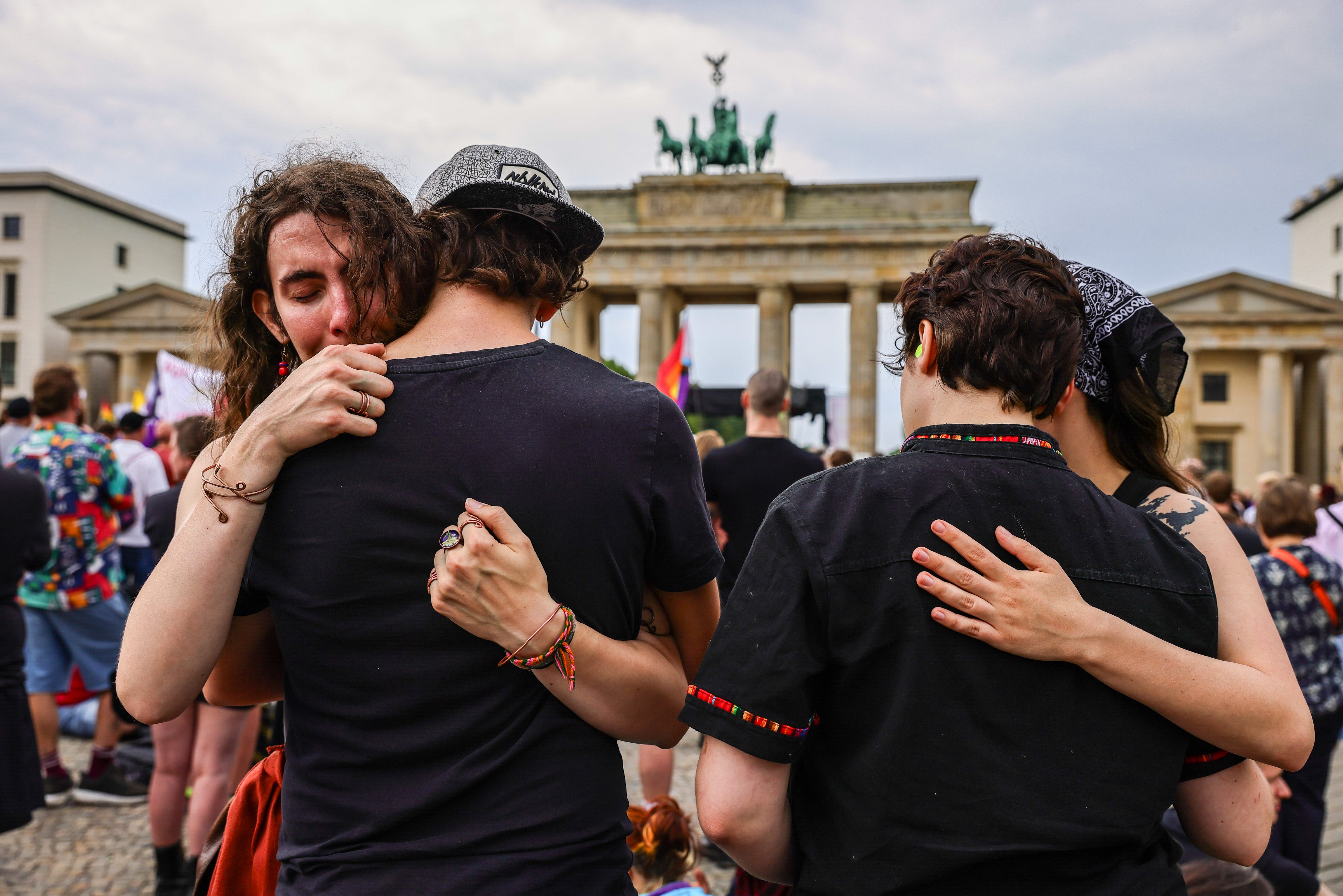
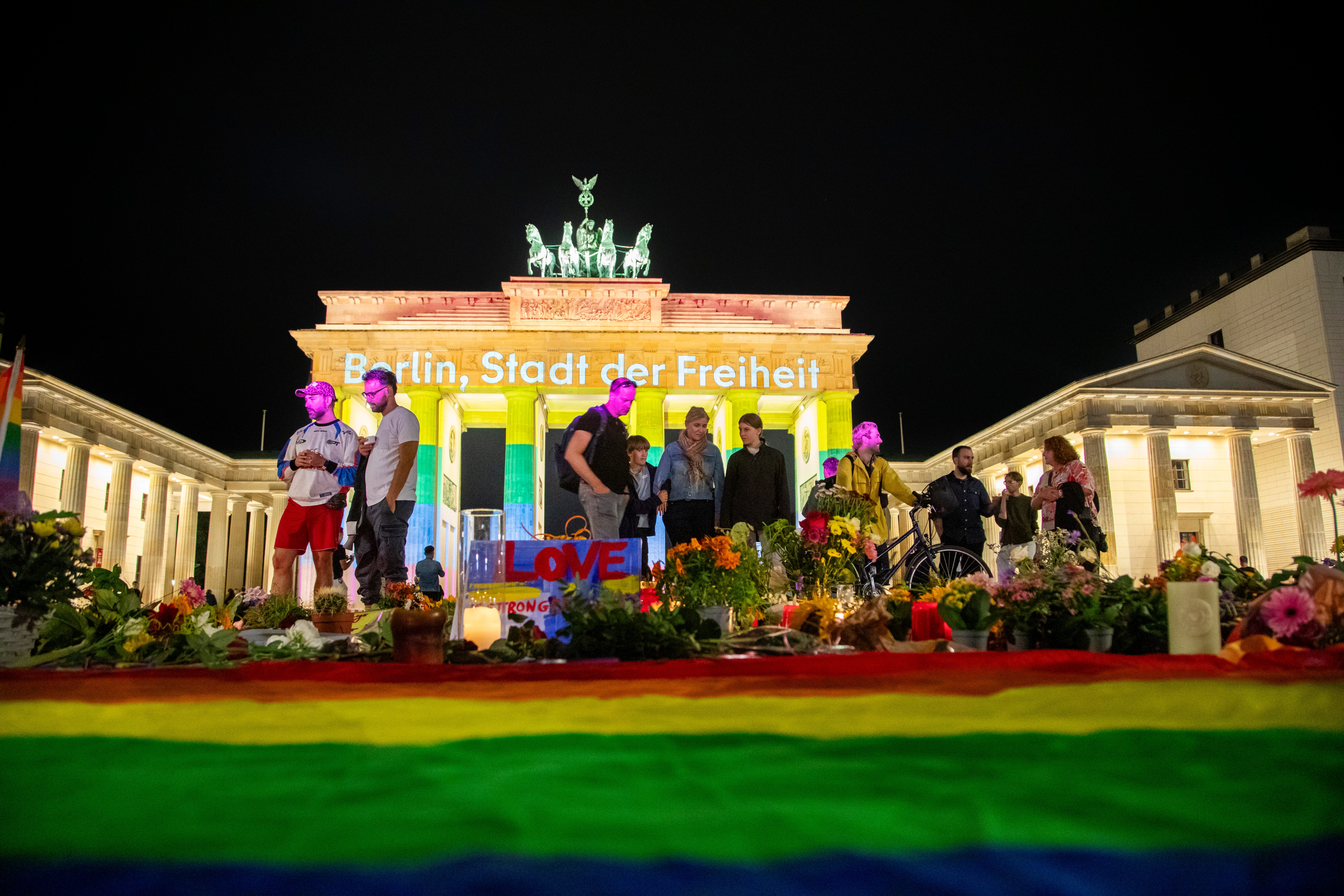
Andre Lehmann, a spokesperson for LSVD+, Germany’s national LGBTQ+ advocacy federation, said, “This suspected attack hits the heart of the queer community.” At a public mourning event Sunday at the Brandenburg Gate, thousands gathered to lay flowers and grieve together. One attendee, Ashley Jump, told reporters, “They’ll never erase us, we’ll never be gone.”
Berlin Joins a Pattern of Deadly Attacks on Pride Events and Queer Spaces
The Berlin attack is the latest in a string of deadly assaults on Pride celebrations and LGBTQ+ gathering spaces in recent years, though the people behind them have had different backgrounds and motives, and not every attack on a queer space has been confirmed as anti-LGBTQ+ in intent.
In 2022, a gunman opened fire near Oslo’s London Pub hours before that city’s Pride parade, killing two people and injuring 21, according to police accounts reported by the Times of Israel. That same year, a gunman killed two people, Juraj Vankulič and Matúš Horváth, outside the Tepláreň bar in Bratislava, Slovakia, in an attack Slovak officials called anti-LGBTQ+ extremism. In the United States, a gunman killed 49 people at Pulse nightclub in Orlando in 2016, and another killed five people and injured 25 at Club Q in Colorado Springs in 2022, according to updated police tallies reported by NPR.
The pattern extends beyond mass-casualty attacks. Germany’s federal crime data, compiled by LSVD+, recorded 2,070 politically motivated crimes targeting sexual orientation in 2025, up 17 percent from the year before, including 284 violent crimes. A separate 1,294 offenses targeted gender diversity, up 12 percent, including 112 violent crimes. Right-wing extremism was tied to the largest identifiable share of both categories, though authorities also logged crimes connected to religious and foreign extremism.
Across the European Union, more than 1 in 10 LGBTIQ people said they had been physically or sexually attacked in the previous five years, and more than half reported hate-motivated harassment in the past year, according to a 2024 survey of over 100,000 people by the EU Agency for Fundamental Rights. In the United States, FBI data analyzed by GLAAD show LGBTQ+ people were the third most targeted group in 2024 hate crime reports, with 1,950 incidents motivated by sexual-orientation bias and 463 by gender-identity bias.
Both the EU agency and the Organization for Security and Co-operation in Europe have said official numbers likely understate the problem, since many victims don’t trust police or don’t want to disclose their sexual orientation or gender identity.
None of that made Sunday’s vigil at the Brandenburg Gate feel like defeat. Thousands showed up anyway.
If you want to support Berlin’s queer community directly, LSVD+ (lsvd.de) is the national LGBTQ+ federation coordinating outreach in the wake of the attack. Subscribe to The Queer Agenda for updates as the investigation continues and as Pride organizers elsewhere respond.
Sources
Suspect in Berlin Pride attack shot dead in police operation, authorities say, The Washington Post
Berlin Pride attacker served less than 2 years in prison for wanting to join ISIS, prosecutors say, CBS News
Suspect in deadly Berlin Pride attack is killed in confrontation with police, PBS NewsHour
Police shoot dead Berlin Pride car-ramming attack suspect, Al Jazeera
Berlin Pride Attack Suspect Dies in Police Confrontation After Daylong Manhunt, Time
Attack on the CSD: Suspected perpetrator dead, Berlin.de (official city government site)
What we know so far about the attack at Berlin CSD, Euronews
Germany releases second suspect in deadly Berlin Pride parade attack, South China Morning Post
“Haltung ist hot”: Berlin feiert den größten CSD seiner Geschichte, Berliner Zeitung
Bundesweite Fallzahlen 2025: Politisch motivierte Kriminalität, LSVD+ factsheet
Harassment and violence against LGBTIQ people on the rise, EU Agency for Fundamental Rights
2 dead, 21 hurt in Oslo terror attack near gay bar, The Times of Israel
Colorado Springs shooting: The official injured toll climbs to 25, NPR
2022 Bratislava shooting: Years of LGBT Intolerance in Slovakia Culminate in Two Killings, Balkan Insight