


Before drag had a Drag Race, it had a draft card.
In World War II, the U.S. Army didn’t just tolerate drag. It funded it, scripted it, and shipped it overseas. Soldiers built pony ballets out of tutus and combat boots. GIs in the South Pacific turned mop heads and coconut shells into wigs and props. President Franklin D. Roosevelt watched a striptease impersonation act at the White House and reportedly loved it.
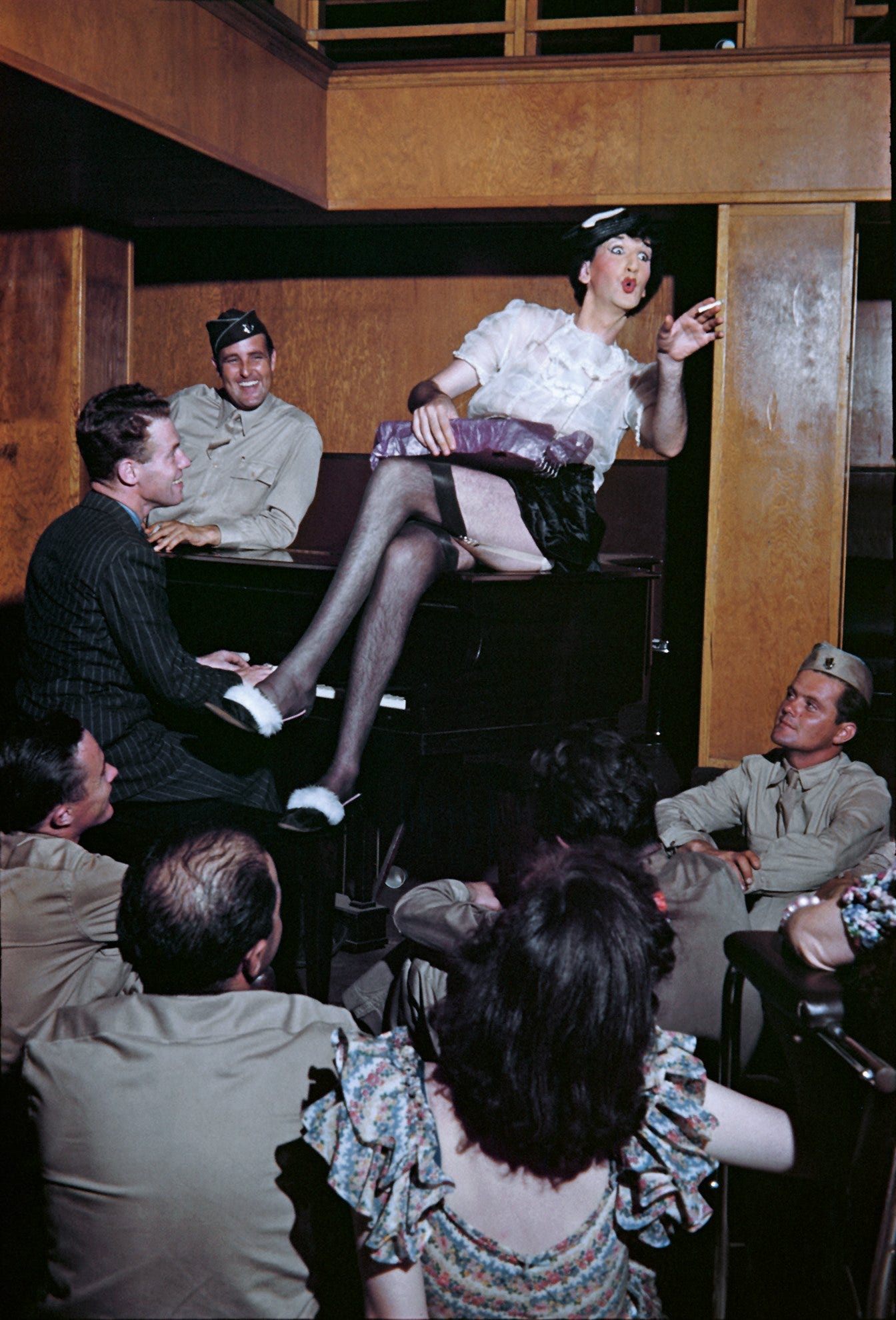
None of this happened because the military was ahead of its time on gender. It happened because women weren’t allowed anywhere near the stage, and because a man in a dress was the era’s most reliable laugh. What’s less remembered is who paid for that laugh once the curtain came down.
How the Army Turned Drag Into Official Wartime Entertainment
By early 1942, military leadership had decided that live theater for troops was “a necessity, not a frill.” The Army’s Special Services division, working with the USO and American Red Cross, built an entire production pipeline around it. Special Services even published “Blueprint Specials,” handbooks that gave units pre-written scripts, dress patterns, and choreography so any base could stage its own variety show, according to research compiled by the National WWII Museum.
Historian Allan Bérubé, whose 1990 book “Coming Out Under Fire” remains the foundational study of gay and lesbian GIs in the war, put it simply: “From Broadway to Guadalcanal, on the backs of trucks, makeshift platforms, and elegant theater stages, American GIs did put on all-male shows.” A typical bill mixed comedy sketches, celebrity impersonations, and full drag numbers, sometimes with soldiers performing in makeup made from rice powder and black pencil.
These shows weren’t fringe entertainment. They were treated as morale infrastructure, on the same tier as USO tours, and leadership framed them as one more job a soldier could be assigned to do.
Inside ‘This Is the Army,’ Irving Berlin’s Drag-Filled Broadway Fundraiser
The biggest of these productions was “This Is the Army.” Irving Berlin wrote the music and co-wrote the book, built around his earlier World War I show “Yip Yip Yaphank.” It opened July 4, 1942, at the Broadway Theatre in New York, ran for 113 performances, and toured nationally to raise money for the Army Emergency Relief Fund, according to Wikipedia’s production history, corroborated by contemporary trade coverage.
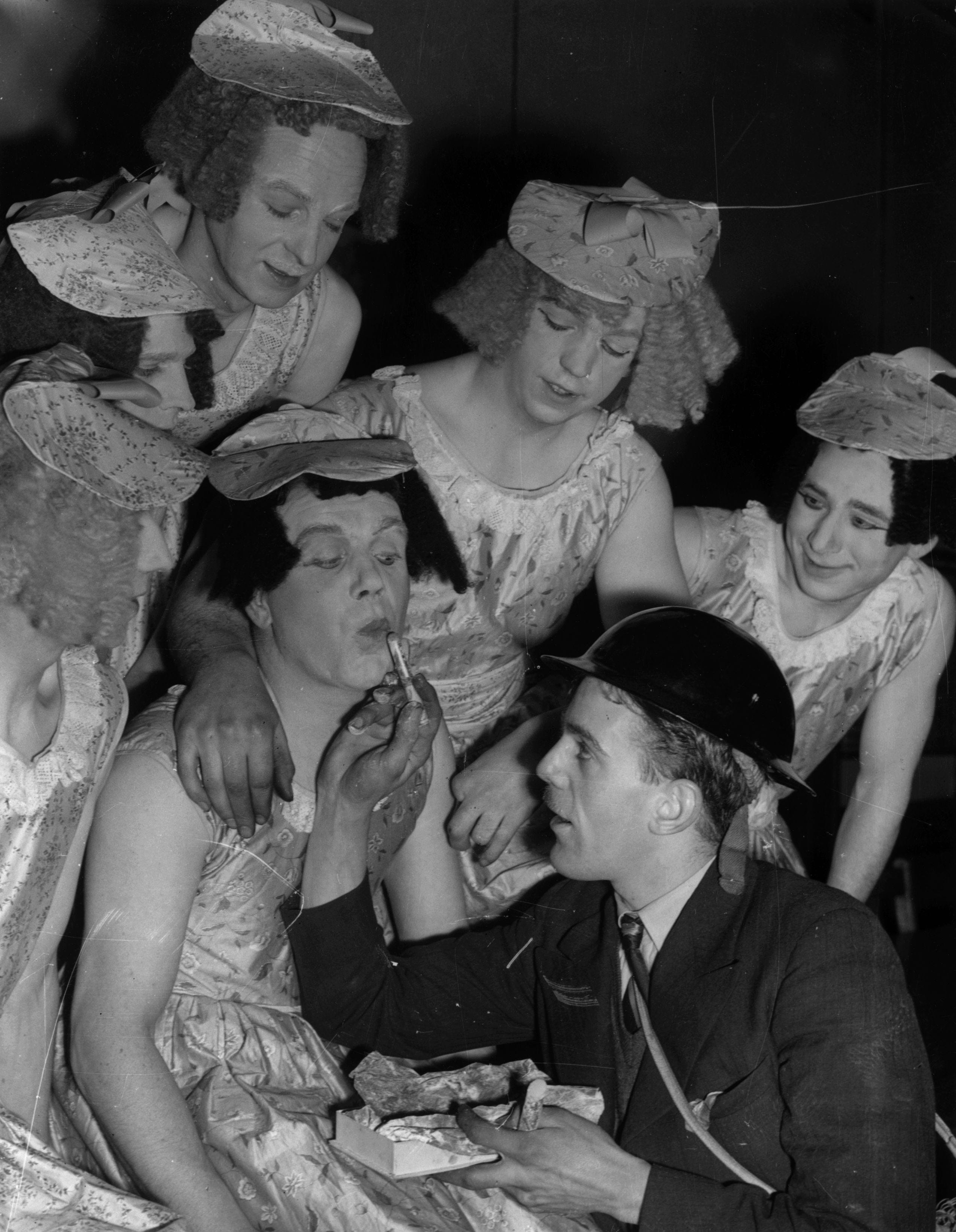
The cast ran roughly 300 soldiers deep, directed by Staff Sgt. Ezra Stone, a working actor before he enlisted. Berlin performed in it himself and pushed to integrate the cast racially, a position that put him at odds with standard military practice at the time. The show’s routines ranged from comic sketches to a full “pony ballet” of GIs dancing in tutus, and its national tour eventually became a 1943 film that pushed total fundraising toward $2 million on stage, with the film adding substantially more.
Why Ronald Reagan Never Actually Performed in Drag
Ronald Reagan appears in the 1943 film version of “This Is the Army,” alongside George Murphy, 37 years before he was elected president. But Reagan did not perform in drag in the film, and he wasn’t part of the Army’s theatrical unit that staged the original production. He served as a liaison officer with the San Francisco Port of Embarkation.
That distinction matters because a set of photos went viral on social media in 2023 claiming to show Reagan in women’s clothing during his Army service. Fact-checkers at Snopes traced the images to unidentified Army Signal Corps soldiers and to actor Alan Manson, who did appear in a dress in the film. Reagan’s connection to WWII drag is real, but it’s a producer’s credit next to famous castmates, not a costume he ever wore.
The Real Reason Women Were Banned From Army Drag Shows
It’s tempting to assume men played every female role because the military was racially segregated. That’s a different policy getting credited for the wrong outcome.
The actual barrier was gender, not race. Col. Oveta Culp Hobby, who ran the Women’s Interest Section of the War Department’s Bureau of Public Relations, issued directives blocking members of the Women’s Army Corps from “singing and dancing in connection with any presentation.” Officials worried WAC performers would read as “too sexually risqué” for audiences of homesick soldiers overseas. WACs were permitted to teach costuming and makeup workshops, but not to take the stage themselves, per the National WWII Museum’s research. Racial segregation was very real in the wartime military and shaped who performed for whom, but it’s a separate fact from why men, not women, filled every female role.
‘Jumping with Jodie’: The Black Soldiers Who Built Their Own Drag Tradition
That segregation did produce its own overlooked chapter. About a month after “This Is the Army” opened on Broadway, soldiers of the 3966th Quartermaster Truck Company, an all-Black unit stationed in Germany, staged “Jumping with Jodie,” believed to be the first all-Black soldier drag production of the war. It featured a Harlem nightclub-style number built and performed entirely within a segregated unit, separate from the white-led productions that got the national press and the presidential audience.
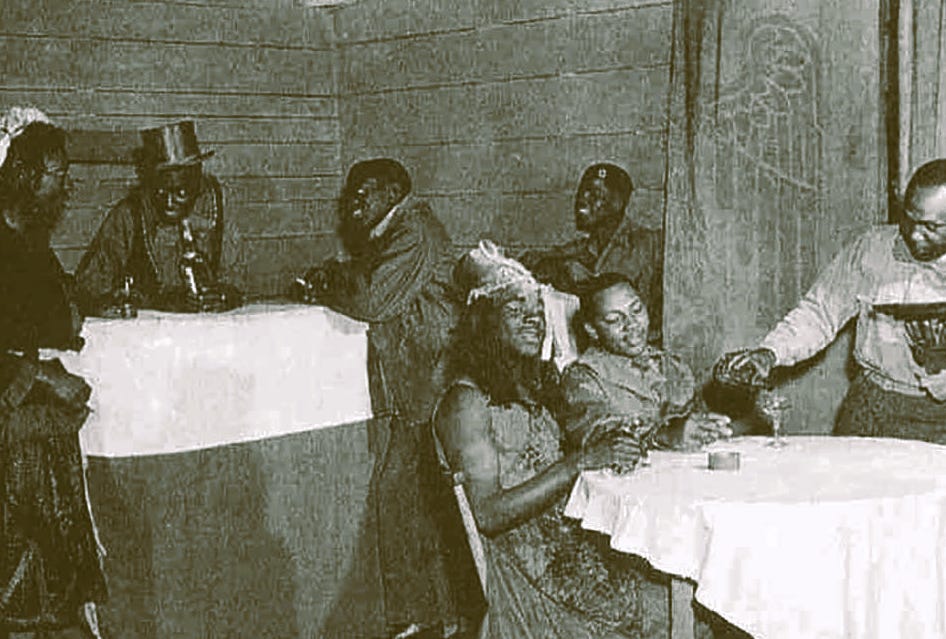
The Army’s entertainment machine ran on the same segregated lines as everything else in the military. Black GIs built their own drag culture inside it, largely uncredited at the time and still rarely mentioned when this history gets retold.
Why the Same Military That Staged Drag Shows Discharged Gay Soldiers
The uncomfortable irony sits right at the center of this history: the Army that paid soldiers to wear dresses onstage was simultaneously screening recruits for homosexuality and discharging those it identified.
Wartime psychiatric screening classified homosexuality as a disqualifying condition, and as the war went on, commanders increasingly moved away from court-martialing suspected gay soldiers for sodomy and toward discharging them administratively as psychiatric cases, a shift Bérubé documented through veteran interviews, letters, and military records. Many received “blue discharges,” a designation that cut them off from GI Bill benefits and veteran status without ever facing a formal charge.
Drag historian Joe E. Jeffreys, who teaches at The New School’s Eugene Lang College (not, as sometimes reported, New York University), studies how these shows functioned differently depending on who was watching. He notes that the shows were built for heterosexual audiences first, as broad wartime comedy in an era when a man in a dress read as an automatic punchline, the same comic register Milton Berle worked in and that “Some Like It Hot” would later mine for laughs. For closeted gay soldiers, though, the same stage could double as one of the only places in military life where gender rules briefly loosened, even as the rest of the institution was actively trying to identify and remove them.
The Legacy These Shows Left Behind
Drag didn’t start in the military, and the Army didn’t intend to build queer culture when it greenlit these shows. It wanted cheap, reliable entertainment for homesick troops, and a man in a dress was the easiest laugh available. But the shows still gave thousands of soldiers, gay and straight, a shared experience of gender play that peacetime American culture rarely offered anywhere else.
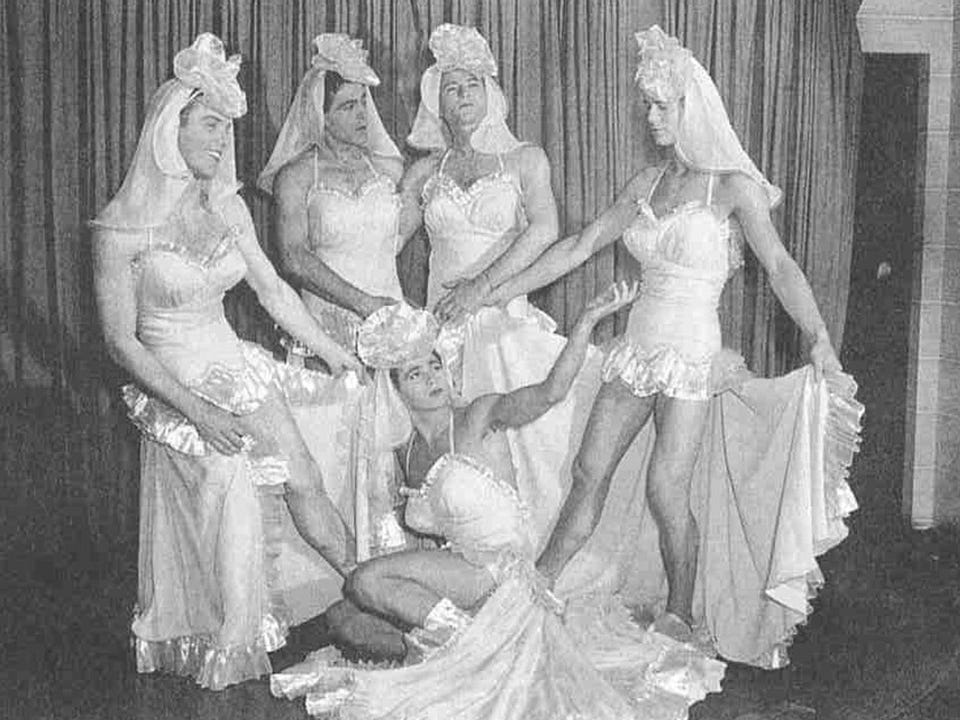
That contradiction, sanctioned onstage and surveilled off it, is the real story underneath the photos of GIs in tutus. It’s worth knowing the next time someone claims drag has nothing to do with military tradition. The Army wrote the script.
If you want more of this kind of buried queer history in your inbox, subscribe to The Queer Agenda.