


Updated Oct. 26, 2026. Election Day is Tuesday, Nov. 3.
With Election Day approaching, there is a lot hiding behind a yes-or-no question. In Missouri, one vote would change abortion rights and medical care for trans kids. In Washington, a measure aimed at excluding trans girls would require every student entering covered girls’ competitions to get a provider’s statement verifying her sex.
I want this guide to be useful with your ballot open beside it. Here are eight measures across six states, what they would actually do, and the existing restrictions that would survive a no vote. Virginia belongs here, too: voters have a chance to replace the same-sex marriage ban still sitting in their constitution.
Start with your state in the quick reference, then read the details below. Keep one distinction in mind: defeating a new restriction does not necessarily get rid of an old one.
Your ballot at a glance
Arizona • Proposition 318
Yes: Expands sex-based sports restrictions, adds rules for covered athletic facilities and broadens lawsuits.
No: Rejects those changes; does not repeal the existing sports statute.
Colorado • Proposition 134
Yes: Requires sex-based eligibility for school and college teams, with mixed-team and limited female-to-male-team exceptions.
No: Adds no new statewide restriction. Existing law, association rules and litigation remain relevant.
Colorado • Proposition 135
Yes: Prohibits specified surgeries for minors and public or insurance payments for them, with exceptions.
No: Rejects that surgery and funding ban.
Missouri • Amendment 3
Yes: Replaces the 2024 reproductive-rights provision with abortion restrictions and a constitutional ban on transition-related procedures for minors.
No: Preserves the 2024 provision and leaves the separate SAFE Act unchanged, including its medication exception and 2027 sunset.
Nebraska • Initiative Measure 442
FOR: Adds sex-based team designations and exclusion from female teams to the state constitution.
AGAINST: Rejects the constitutional amendment; does not repeal the 2025 sports law. Nebraska uses FOR and AGAINST on this measure.
Virginia • Question 2
Yes: Replaces the unenforceable same-sex marriage ban with marriage-equality protections.
No: Leaves the constitutional wording unchanged. It would not itself end legal same-sex marriage.
Washington • IL26-638
Yes: Excludes trans girls from covered girls’ sports and requires provider verification for everyone seeking to enter those competitions.
No: Rejects those new requirements.
Washington • IL26-001
Yes: Restores the 2024 parental-rights statute, changing school-record access, notifications and opt-outs.
No: Keeps the statute as revised in 2025.
These are summaries, not substitutes for your ballot. The sections below link to official documents and explain the qualifications that matter.
Washington: sex verification for girls’ sports
Washington’s legislative summary describes WIAA rules allowing participation according to gender identity. Student athletes already need a sports physical. IL26-638 would add a separate requirement within that process.
Under the state’s analysis of IL26-638, covered female-only competitions would exclude students the measure classifies as biologically male. Each student seeking to enter those competitions would need a statement signed by their personal health care provider.
The statement would verify sex using reproductive anatomy, genetic makeup or naturally produced testosterone levels. There is no equivalent requirement for boys’ teams. The measure does not require every student to undergo all three procedures, or expressly require a genital examination for everyone.
The verification requirement is the part I would read closely. It reaches beyond trans athletes. But requiring verification is not the same as requiring an invasive examination of every girl, and we should be precise about that.
The Washington State PTA opposes the proposal. It argues that routine sports physicals do not currently establish sex in the way the initiative requires. The organization also identifies missing thresholds and potentially conflicting results.
That concern includes intersex students, whose sex characteristics may differ from typical male or female patterns. The PTA notes that one permitted method could produce a different answer from another. So which result would count? Families deserve an answer. That uncertainty does not establish that every intersex student would be excluded.
Supporters describe the measure as protecting fairness and safety in girls’ sports. Opponents question both the exclusion of transgender students and the burden of verification on other girls. A voter can have questions about both.
When: The legislative summary says the initiative would take effect 30 days after the election if approved. A no vote would reject the new statutory requirements; it would not settle separate legal disputes over school sports.
Washington: parental access to school records
Lawmakers revised the 2024 parental-rights statute through House Bill 1296 in 2025. IL26-001 would restore its original form.
The earlier language provides access to a broad category of school-held records, including health and vocational-counseling records. It also restores medical-service notifications and broader opt-outs from certain activities involving sensitive questions.
The 2025 changes aligned education-record access with federal law and expanded nondisclosure protections in specified abuse investigations and criminal proceedings. Restoring the earlier statute would reverse those changes. The scope matters here: this is not unrestricted access to every confidential conversation or medical record.
King County’s resolution opposing the initiative warns that disclosure could discourage vulnerable students from seeking help. For LGBTQ+ students, the concern is disclosure to an unsupportive or unsafe parent. The risk deserves attention without pretending every conversation would automatically be disclosed.
When: The legislative summary specifies 30 days after the election if approved. A no vote leaves the 2025 revisions intact.
Colorado: two separate votes on sports and surgery
Colorado gives voters two separate decisions. You can vote differently on them. The official Colorado Blue Book contains their text and explanations.
Proposition 134: Requires male, female or mixed team designations and sex-based participation. Its exceptions include mixed teams and female participation on male teams when no female team exists.
Current policy is not uniform. The Blue Book describes a CHSAA settlement allowing participating schools to maintain sex-based teams without association penalties. NCAA rules also differ from intramural rules. Rejection would not guarantee identical access at every school.
Proposition 135: Prohibits surgeries altering minors’ sex characteristics in response to their perception of sex or gender. It also bars public funds and insurance payments for those surgeries. Exceptions include circumcision and specified medical conditions.
The proposal does not prohibit puberty blockers or hormones. The Blue Book warns its wording could also affect some non-transgender minors’ surgeries.
When: Both measures need a majority and specify Jan. 1, 2027, effective dates if approved.
Missouri: abortion rights and youth care on one question
Missouri’s measure is two fights stapled together. If you want to preserve abortion rights but restrict trans care, or take the opposite position, this ballot gives you no way to split those votes.
The secretary of state’s ballot explanation says Amendment 3 would repeal the reproductive-rights provision approved in 2024. It would replace that protection with abortion restrictions, including specified exceptions, and prohibit transition-related procedures for minors.
The care provision covers surgery, hormones and puberty-blocking medications used for gender transition, with exceptions for specified medical conditions. Voters cannot separate the abortion and transgender-care provisions on this ballot question.
What already exists: Missouri’s 2023 SAFE Act already restricts surgery and medication for minors. But its medication subsection has two important qualifications: an exception for patients treated before Aug. 28, 2023, and an Aug. 28, 2027, expiration date.
The surgery prohibition does not share that expiration date. A no vote would not erase the SAFE Act, but it would leave those distinctions in the statute. A yes vote would establish a separate constitutional restriction, rather than simply renew an identical permanent law.
Same number. Different amendment. Missouri called its 2024 reproductive-rights measure Amendment 3, too. Do not let a remembered campaign slogan make this year’s decision for you.
An August SLU/YouGov poll found 43% support, 44% opposition and 13% unsure. That is an August snapshot, not a prediction of the November result.
Arizona: sports eligibility, facilities and lawsuits
The 2022 sports statute covers public schools and private schools whose students or teams compete against public schools. Private-school coverage is therefore not entirely new.
The Legislative Council’s analysis of Proposition 318 describes broader requirements for public and private schools and athletic associations. Eligibility would use sex recorded on the original birth certificate.
Covered restrooms, locker rooms and showers would also have sex-based access restrictions. The text concerns spaces integral to athletic participation and applies to “any individual,” not only students. It additionally expands who may sue and who may be sued for alleged violations.
Why passage has lasting consequences: Arizona’s constitution restricts legislative changes to voter-approved measures. Amendments generally require three-fourths of each chamber and must further the measure’s purposes. A later legislative majority could not simply repeal it.
A no vote rejects Proposition 318’s additions. It does not repeal the 2022 statute or resolve separate litigation over its enforcement.
Nebraska: putting a sports restriction in the constitution
Nebraska enacted sex-based school-sports restrictions in 2025. Initiative Measure 442 would put key provisions into the constitution, making them harder to change through ordinary legislation.
The official voter pamphlet describes male, female or mixed team designations. Teams designated for females would exclude students classified as male. The proposal does not impose an equivalent blanket exclusion from male teams.
Coverage includes public schools and public colleges, plus private institutions competing against them. It reaches interscholastic, intercollegiate and intramural sports.
What the court decided: On Oct. 16, the Nebraska Supreme Court rejected a challenge to the petition’s object statement. Ullman v. Evnen addressed the petition’s legal sufficiency. It did not resolve every possible challenge to future enforcement.
Vote FOR to adopt the amendment or AGAINST to reject it. Rejection leaves the separate 2025 statute in place.
Virginia: marriage equality in the state constitution
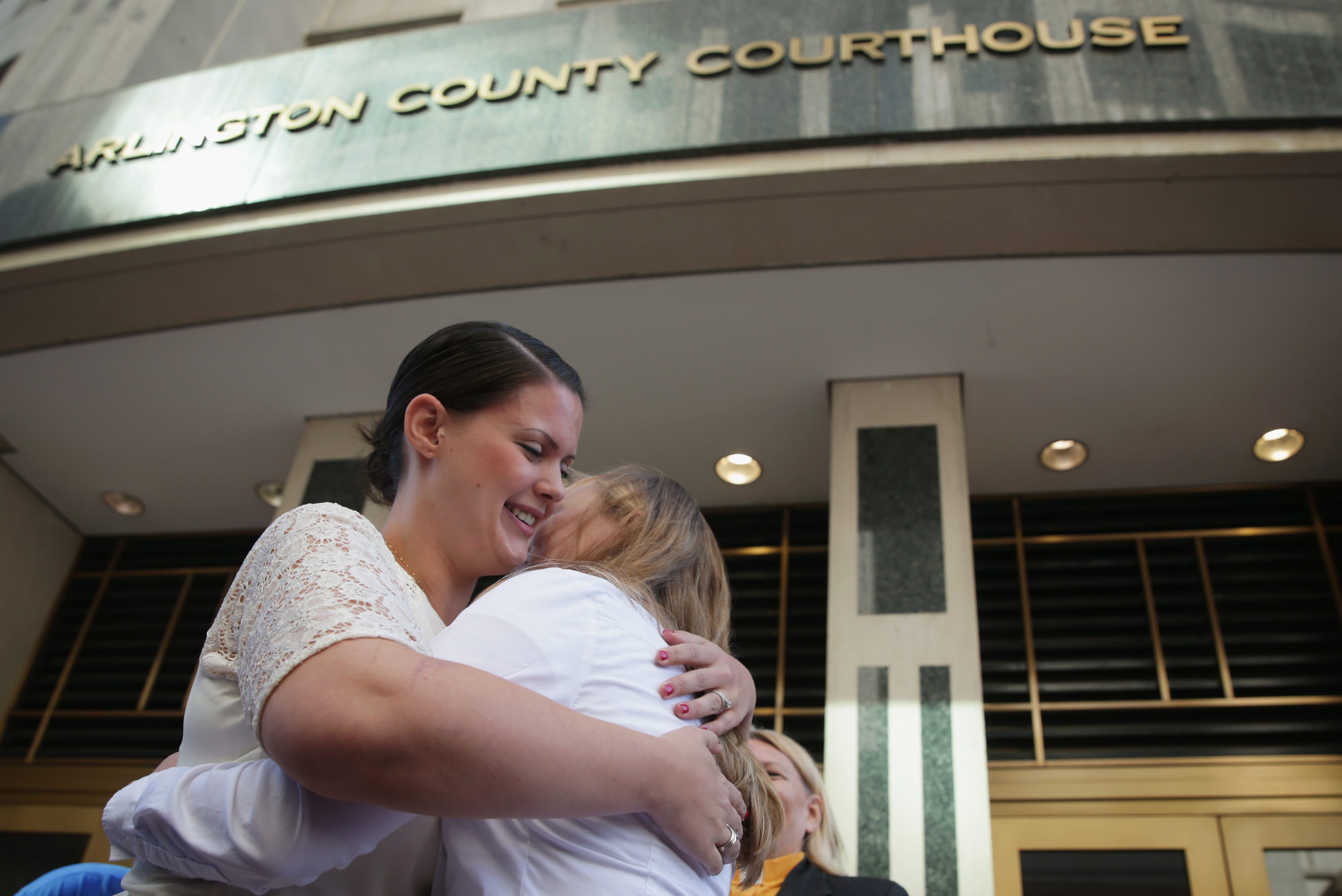
Same-sex marriage is legal, but Virginia’s constitution still contains an unenforceable prohibition. Question 2 would replace that language with affirmative protections.
The amendment would prevent denial of a marriage license to two adults because of sex, gender or race. It would also require equal treatment of lawful marriages.
A yes vote would establish those protections in Virginia’s own constitution. A no vote would leave the existing wording, but would not itself cancel marriages or stop same-sex couples from marrying.
I would not dismiss this as housekeeping. The question is whether Virginia’s own constitution should protect these marriages instead of continuing to say they are prohibited.
What the Supreme Court ruling does and does not decide
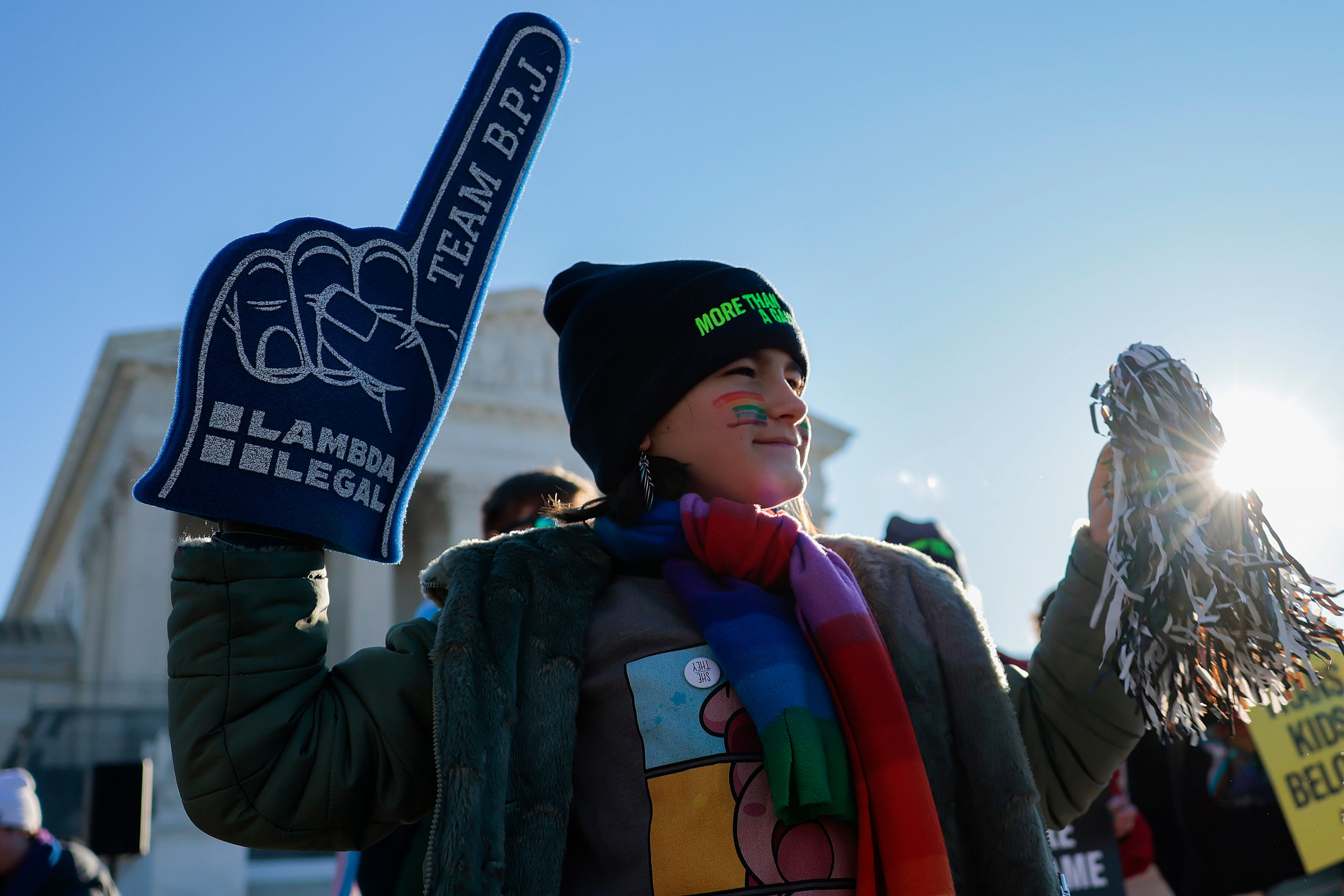
On June 30, the Supreme Court upheld the challenged West Virginia and Idaho sports restrictions in West Virginia v. B.P.J. and Little v. Hecox.
The Court divided 6–3 on equal protection. All nine justices agreed B.P.J.’s Title IX claim failed, although their reasoning differed. The decision permits the challenged exclusions; it does not order every state to adopt them.
The opinion expressly leaves open the separate question of whether schools may allow transgender girls on girls’ teams. It should not be treated as a blanket answer to every dispute involving student privacy, verification or state constitutional rights.
That leaves voters with a real choice. A court allowing a restriction does not require your state to enact it.
Before you submit your ballot
Before you send that ballot back, check three things:
Match the number and year. Read the official question alongside this guide, especially Missouri’s Amendment 3.
Check your voting options. Start at Vote.gov and follow the links for your state. Confirm registration, identification requirements, ballot-return deadlines and your polling or drop-off location with election officials.
Separate passage from implementation. Election-night results do not necessarily mean a new rule starts the next morning. Effective dates, certification, implementation guidance and court orders can affect what happens next.
For families navigating school or medical decisions, read the current guidance from the relevant institution as well. This guide explains the ballot choices; it cannot determine an individual student’s eligibility or treatment options.
The effects reach beyond the final tally. In The Trevor Project’s 2025 national survey, 90% of LGBTQ+ youth respondents reported stress or anxiety from recent anti-LGBTQ+ laws, policies and debates. That finding describes survey participants, not every LGBTQ+ young person.
Which part of your ballot still needs a clearer answer? Leave a question below. Please keep anyone’s private medical or school information out of the comments.
Know someone voting in one of these six states? Send them this guide. Subscribe to The Queer Agenda for more reporting on the decisions shaping LGBTQ+ lives.
How this guide was checked
This guide uses the official ballot materials, statutes and court documents linked throughout, with advocacy positions attributed to their sources. It is a review of those records, not original interviews. Last checked Oct. 26, 2026. Check with election officials for later changes.