


One of the country’s largest LGBTQ+ archives has shelving in every office and the overflow in rented South Florida warehouses. It also has no federal or state grant money left.
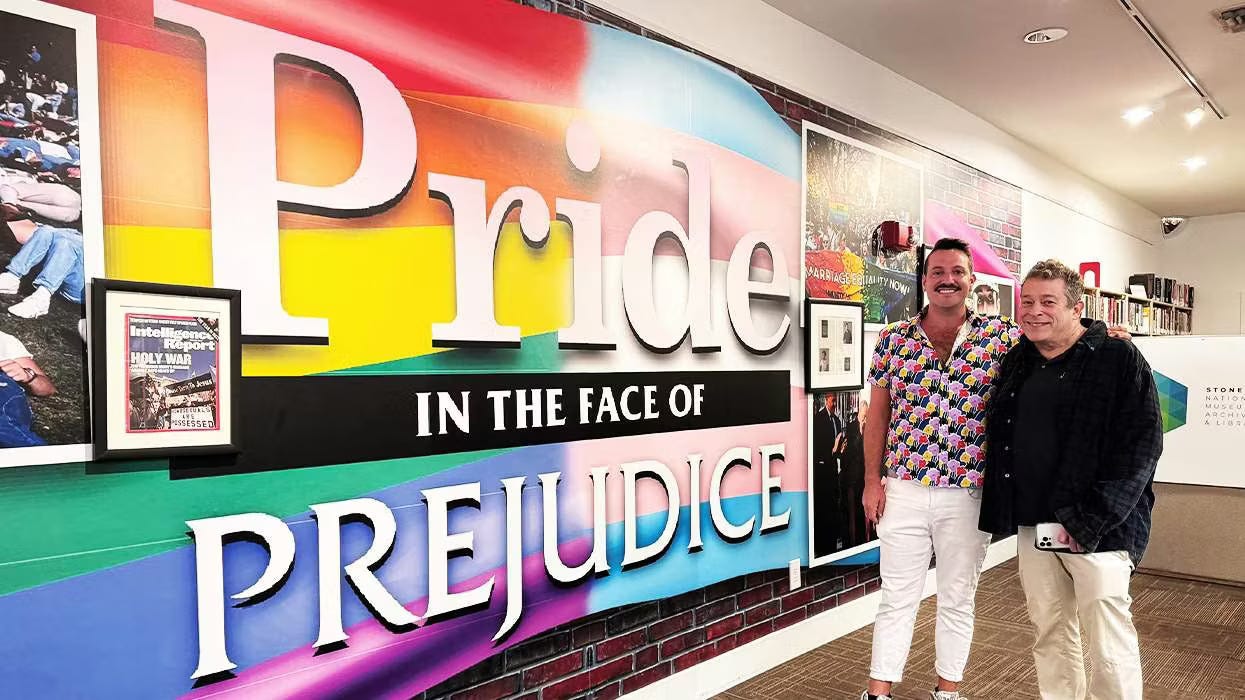
The Stonewall National Museum, Archives & Library in Fort Lauderdale has been collecting since 1973. It holds roughly 30,000 volumes, including close to 1,000 rare books, plus 2,700 linear feet of archival material that adds up to more than six million pieces of paper. Its collection runs from the Stonewall uprising through 1980s AIDS activism to the court fights happening right now.
All of it sits in a building that opened before the Korean War.
Museum leadership says it is raising $40 million to move. That figure comes from the museum itself, and I could not find a public campaign document or filing that confirms it. What is confirmed, in detail and from multiple sources, is the financial squeeze that produced it.
Fort Lauderdale’s Stonewall Museum Lost Every Federal and State Grant It Had
“In federal and state funds, we are down 100%,” president and CEO Robert Kesten told WLRN in October 2025.
The itemized version is worse than the headline number suggests, because the grants were small and steady. That is exactly what a working archive runs on. According to the museum’s accounting of its losses:
National Endowment for the Humanities: $10,000 to $25,000 a year
U.S. Department of Education: $10,000 to $25,000 a year
Florida Division of Arts and Culture: $50,000
Florida Humanities, an NEH state affiliate: $25,000 to $50,000 a year
Roughly $100,000 in corporate sponsorship went with it. The museum’s total operating budget is about $1 million. Three staff positions sit unfilled.
The corporate retreat showed up first at the gala. Sponsors dropped from between six and ten in previous years to a single sponsor, Kesten told Axios in February 2025. About a quarter of the seats went unsold. “This is stretching into places that we really have not seen before,” he said. “Our future is threatened now.”
The museum also canceled its $475 Visit Florida membership after the state tourism agency deleted the section of its site aimed at LGBTQ+ travelers. Visit Florida refunded the money. Small dollars, loud signal.
What $40 Million Buys: Climate Control, Shelf Space and a Building Younger Than the Collection
The physical problem is not abstract. The museum occupies a 77-year-old building with inadequate climate control, and Kesten has said the operation is “10,000-plus feet too small”.
Paper, photographs, textiles and film all degrade faster in unstable heat and humidity. South Florida supplies both. Off-site storage units solve the space problem and make the preservation problem worse, because commercial storage is not built for archival material.
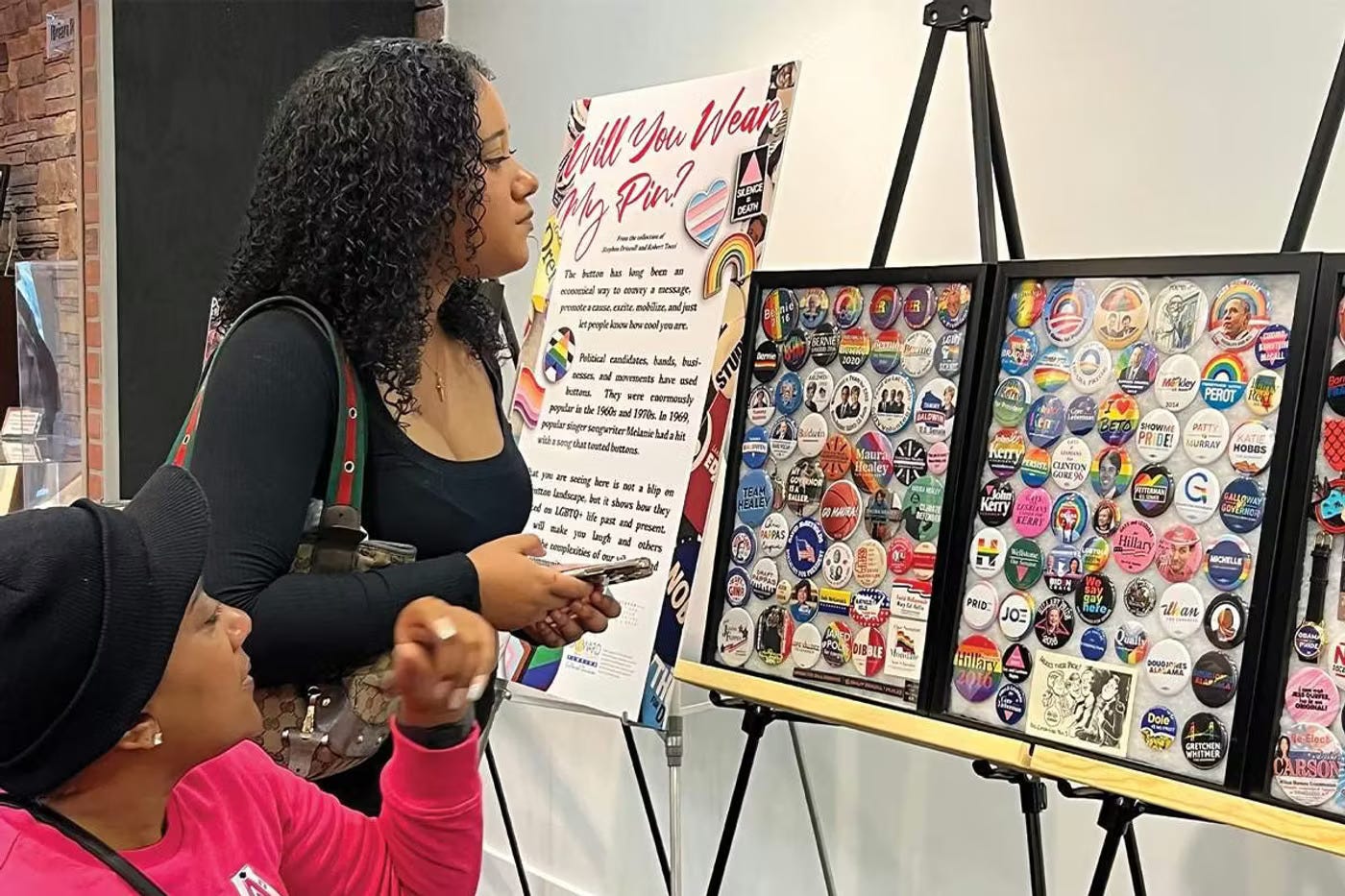
There is a working cost too. Pulling together a single exhibition can mean hunting through multiple warehouses for pieces that should sit on one shelf.
Kesten has said the museum needs roughly $1.5 million a year to run at 90% capacity. It has about $1 million.
How a $25,000 NEH Matching Grant for a Gay Revolutionary War General Got Approved
Here is the part that complicates the story.
In April 2026, the same National Endowment for the Humanities that had stopped funding the museum awarded it a $25,000 matching grant. The money supported “Von Steuben: Architect of American Independence,” which ran April 17 through May 15 at the Fort Lauderdale campus. The museum plans to tour it.
Baron Friedrich Wilhelm von Steuben landed at Portsmouth, New Hampshire, on Dec. 1, 1777. He was broke, spoke no English, and had left Prussia under a cloud of accusations about his relationships with men. George Washington made him inspector general. He drilled the Continental Army at Valley Forge and wrote the manual it trained on. Historians point to his long relationship with his aide-de-camp Benjamin Walker as evidence he was gay.
The museum got in through the door marked America 250. “OK, they’re telling us that they’re not interested, but there is Baron von Steuben,” Kesten told the Miami Herald.
One narrow award for a semiquincentennial program is not a reversal of policy. It is a $25,000 match against a six-figure hole. But it does show something useful: queer history is fundable when it is framed as American history, because it is American history.
Trump’s FY27 Budget Would Zero Out IMLS and Cut the NEH to $39 Million
Fort Lauderdale is not an isolated case, and the pattern is documented.
On March 14, 2025, President Trump signed Executive Order 14238, directing the dismantling of the Institute of Museum and Library Services. On April 1, 2025, IMLS terminated a $250,000 grant to the Ohio History Connection for ten historical markers commemorating LGBTQ+ sites and figures.
The White House FY27 budget request, released April 3, 2026, would eliminate IMLS entirely, cut the National Endowment for the Arts from $208 million to $29 million, and cut the NEH from $192 million to $39 million.
That is a proposal, not law. Congress has not adopted it, and for FY26 lawmakers actually passed a $1.4 million increase for federal library programs. Appropriations are still moving.
The erasure has been more literal elsewhere. On Feb. 14, 2025, the National Park Service stripped “transgender” and “queer” from the Stonewall National Monument website and replaced “LGBTQ+” with “LGB.” In February 2026, the Park Service removed the Pride flag from the monument. Lambda Legal and the Washington Litigation Group sued on behalf of the Gilbert Baker Foundation, Village Preservation, and Equality New York. On April 13, 2026, the administration settled and agreed to restore the flag permanently within seven days.


Note who got cut first, both times. Trans history was the opening target at the federal monument named for a riot trans women helped start.
That is the argument for the archive in Fort Lauderdale. Its collection focuses on the American Southeast from 1950 forward, which means it holds regional queer material that no federal institution duplicates. Small-city Florida newsletters. Bar ephemera. AIDS-era organizing records from a state that spent that decade legislating against the people making them. If the federal record thins, private archives are the record.
DeSantis Vetoed $3 Million More in Florida Arts Grants in the 2026-27 Budget
The state pressure is separate and stacked on top.
Gov. Ron DeSantis vetoed $32 million in arts and culture grants in June 2024, zeroing out the program that had funded organizations like Stonewall.
In 2025, House Bill 1011 and Senate Bill 1524 proposed restoring grants with conditions attached. The governor would appoint nine of 15 council members instead of seven. The secretary of state would gain power to review and edit the list of recipients. The minimum qualifying score would jump from 80 to 95, a change that would have cut previously funded groups including Arts Garage and the Gay Men’s Chorus. The phrase “appropriate for all age groups” appeared five times. I was not able to confirm the exact language of the final enacted version, so treat those specifics as proposed, not settled law.
On June 30, 2026, DeSantis signed the 2026-27 budget with $20 million in programming support for 121 organizations. He vetoed $3.06 million, including $3 million for Culture Builds Florida grants. Another $7.5 million sits undistributed, waiting on a secondary list from the Florida Council on Arts and Culture.
Our Fund Foundation and a New Women’s Fund Are Replacing the Museum’s Lost Grants
The replacement money is local, private and slower.
In October 2025, the Our Fund Foundation gave the museum $40,000 for programming and operating costs, part of $370,000 distributed across 19 LGBTQ+ organizations in Broward and Miami-Dade counties.
The Stonewall National Women’s Fund launched to court affluent women donors directly. F. Kendall Sharp chairs it, with writer Rita Mae Brown as honorary chair. Roughly 40 members commit $1,000 a year for three years. The March 2025 gala cleared more than $300,000.
Sharp has said many supporters were discouraged by the political landscape and wanted to get involved but did not know how.
“The sharing of history, the sharing of traditions, the sharing of culture is what keeps us alive” as a community, Kesten has said.
Florida’s Undistributed $7.5 Million and the Stonewall Museum’s Unfunded Site Search
Three things will tell you where this lands.
Whether the museum names a site. The search is ongoing and unfunded, and a $40 million campaign without an address is a wish.
Whether Florida distributes the remaining $7.5 million, and to whom. That list is a direct readout on which organizations the state considers fundable.
Whether Congress adopts the FY27 request. IMLS elimination and a 79% NEH cut would end small operating grants for community archives nationwide, not just this one.
How to Donate Materials or Money to the Stonewall National Museum
If you have a shoebox of queer South Florida history in a closet, the archive wants it more than it wants your money, and it is the harder thing to replace. Contact the museum at Inquiry@Stonewall-Museum.org or 954.763.8565. If you want to give financially, stonewall-museum.org takes donations directly. And subscribe to The Queer Agenda. We follow these stories past the news cycle.
So maddening and so sad! Thank you for shining a light on this. I hope the museum staff can hang in there long enough for the political tides to change and their plight gains visibility and financial help. Calling MacKenzie Scott and Melinda Gates!