


Trans Americans Have Survived 250 Years of This Country. They’re Not Backing Down Now.
“We will find you and we will kill you.”
That line isn’t from a terrorist group. It’s from the Trump administration’s own 2026 United States Counterterrorism Strategy, released May 6. The document lists “radically pro-transgender” ideology alongside cartels and Islamist terror networks as a national security threat, and vows that “violent secular political groups” tied to that ideology will be targeted for “rapid identification and neutralization.”
Trans Americans didn’t become a federal security concern overnight. They’ve been navigating a country that didn’t know what to do with them since before it was a country. This July marks 250 years since the Declaration of Independence. Trans and gender-nonconforming people have been part of every one of those 250 years: sometimes visible, mostly criminalized, and right now, named directly in a federal strategy document.
Here’s what that history actually looks like, and exactly where things stand today.
The Trump Administration’s New Counterterrorism Strategy Names “Radically Pro-Transgender” Ideology as a Threat
The 2026 U.S. Counterterrorism Strategy groups “anti-American, radically pro-transgender, and anarchist” ideology with cartels and Islamist terrorism as priorities for “national CT activities.” It closes with a direct warning, attributed to President Trump: “If you hurt Americans, or are planning to hurt Americans, ‘We Will Find You and We Will Kill You.’”
The strategy doesn’t name a specific plot, attack, or organization tied to transgender people. Civil liberties groups and legal observers have called the language an escalation, warning it opens the door to treating trans advocacy itself as a security threat rather than a political viewpoint. The document is real, current U.S. government policy as of this writing. It’s also the most direct language a federal strategy document has used against transgender Americans.
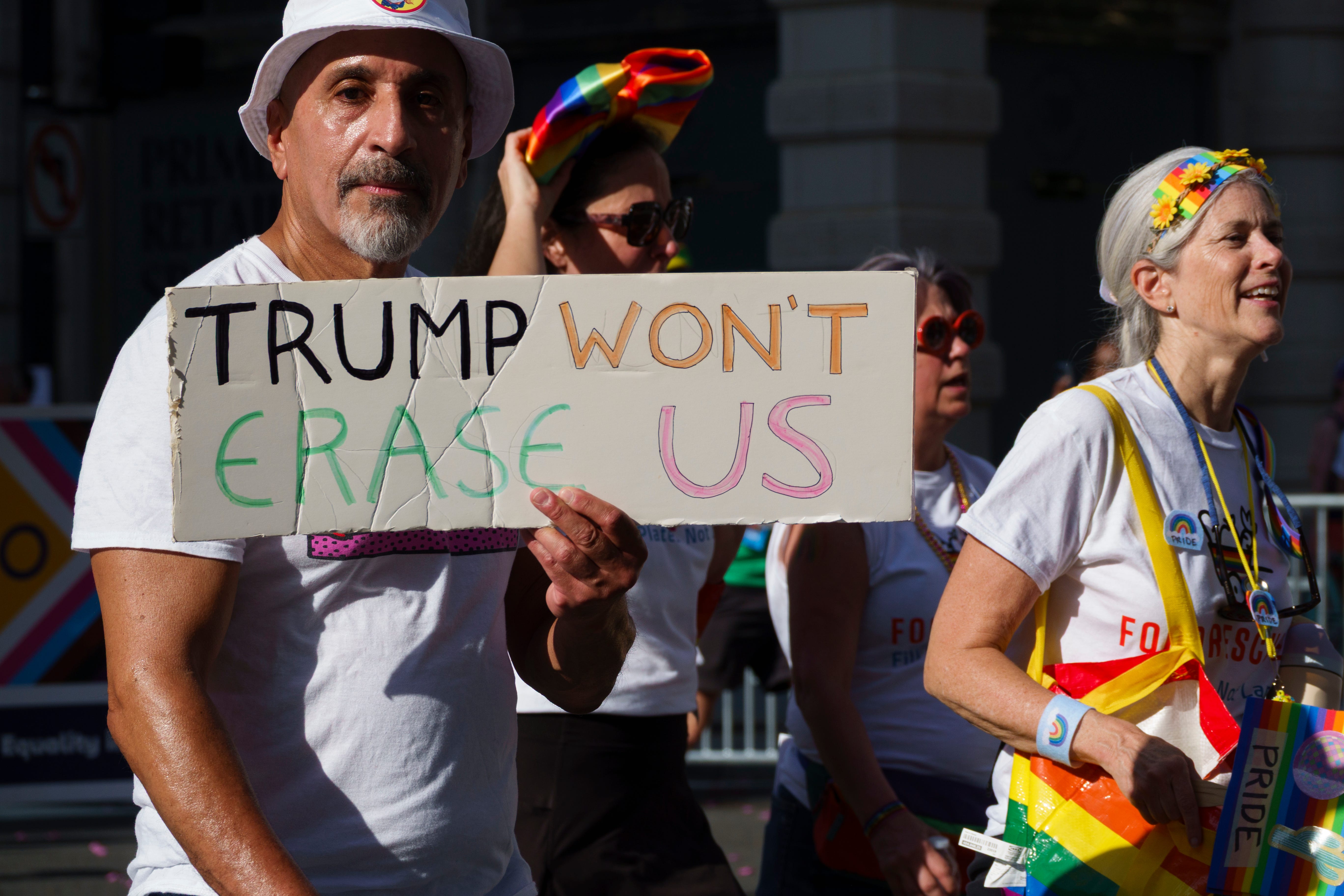
That’s where the country stands in the summer of 2026. To understand how it got here, and why this moment is an escalation rather than something entirely new, it helps to look back. Trans Americans have been organizing, testifying, and surviving in this country since 1776.
Trans Life in Revolutionary and 19th-Century America Meant Arrest, Not Acceptance
In 1776, Jemima Wilkinson, a Quaker preacher, survived a severe fever and emerged with a new identity: the Public Universal Friend. The Friend rejected she/her pronouns, presented as gender-nonconforming, and preached across the Northeast for decades. It’s one of the earliest documented gender-nonconforming identities in what would become the United States.
The 19th century treated that kind of identity as a crime. Lucy Ann Lobdell, born in 1829, began living as Joseph Israel Lobdell in 1854. Arrested in 1858 for “impersonating a man,” Lobdell was acquitted only because a judge decided he could perform men’s work. In 1880, he was committed to an asylum, where he continued to insist he was a man until his death.
In 1836, a sex worker named Mary Jones was arrested in Manhattan after a physical search revealed a prosthesis under her clothing. Newspapers and lithographs, including one from publisher H.R. Robinson, mocked her as a “man-monster.” She was sentenced to five years at Sing Sing for grand larceny; the extensive record from her case focuses almost entirely on her gender rather than the theft charge itself.
By 1843, St. Louis had become the first U.S. city to criminalize cross-dressing outright, making it a misdemeanor to appear in public “in a dress not belonging to their sex.” Dozens of other cities passed similar ordinances over the following decades.
Not every 19th-century story was one of persecution alone. We’Wha, a Zuni lhamana born in 1849, became a cultural ambassador to Washington, D.C., met President Grover Cleveland, and helped document Zuni artifacts, all while embodying a recognized third-gender role within Zuni culture, distinct from how white American society understood gender at the time.
During the Civil War, at least 400 women disguised themselves as men to fight; historians believe most did so to serve, not out of a trans identity. One soldier, Albert Cashier, continued living as a man for the rest of his life, until his death in 1915.
In 1866, Frances Thompson became, by most historical accounts, the first trans woman to testify before Congress, describing being assaulted during the Memphis massacre, in which 40 people were killed over three days of racist violence. Congress didn’t know she was trans at the time. A decade later, after being outed, she was arrested, fined, and forced into an all-male chain gang to work off the fine she couldn’t pay.
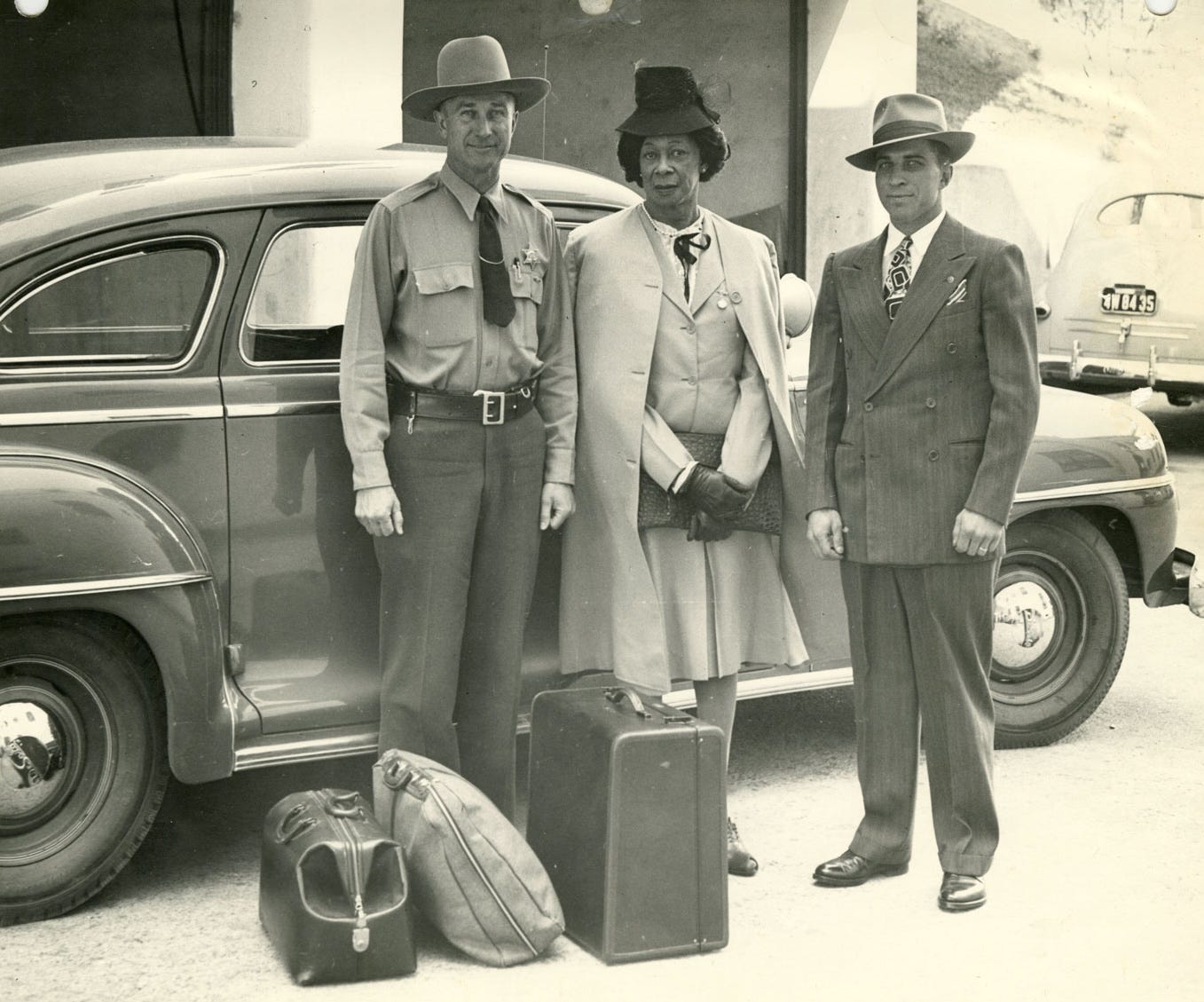
Lucy Hicks Anderson, born in 1886, lived as a woman from childhood with her mother’s support. In 1945, after her identity became public, her marriage was voided, and she was prosecuted for perjury. “I have lived, dressed, acted just what I am, a woman,” she told reporters during the trial.
New York City’s Cercle Hermaphroditos, believed to be the first informal transgender advocacy group in the country, formed in 1895 around Paresis Hall, a Bowery bar. When politician Murray Hall died in 1901, a coroner’s inquest revealed he was a transgender man; The New York Times reported it as a man who had “masqueraded in male attire.”
Christine Jorgensen’s Surgery Made Trans Visibility a National Story in the 1950s
In 1917, Dr. Alan Hart, a trans man, underwent a hysterectomy performed by Dr. Joshua Allen Gilbert, who wrote afterward that Hart had emerged with “a new hold on life and ambitions worthy of his high degree of intellectuality.”
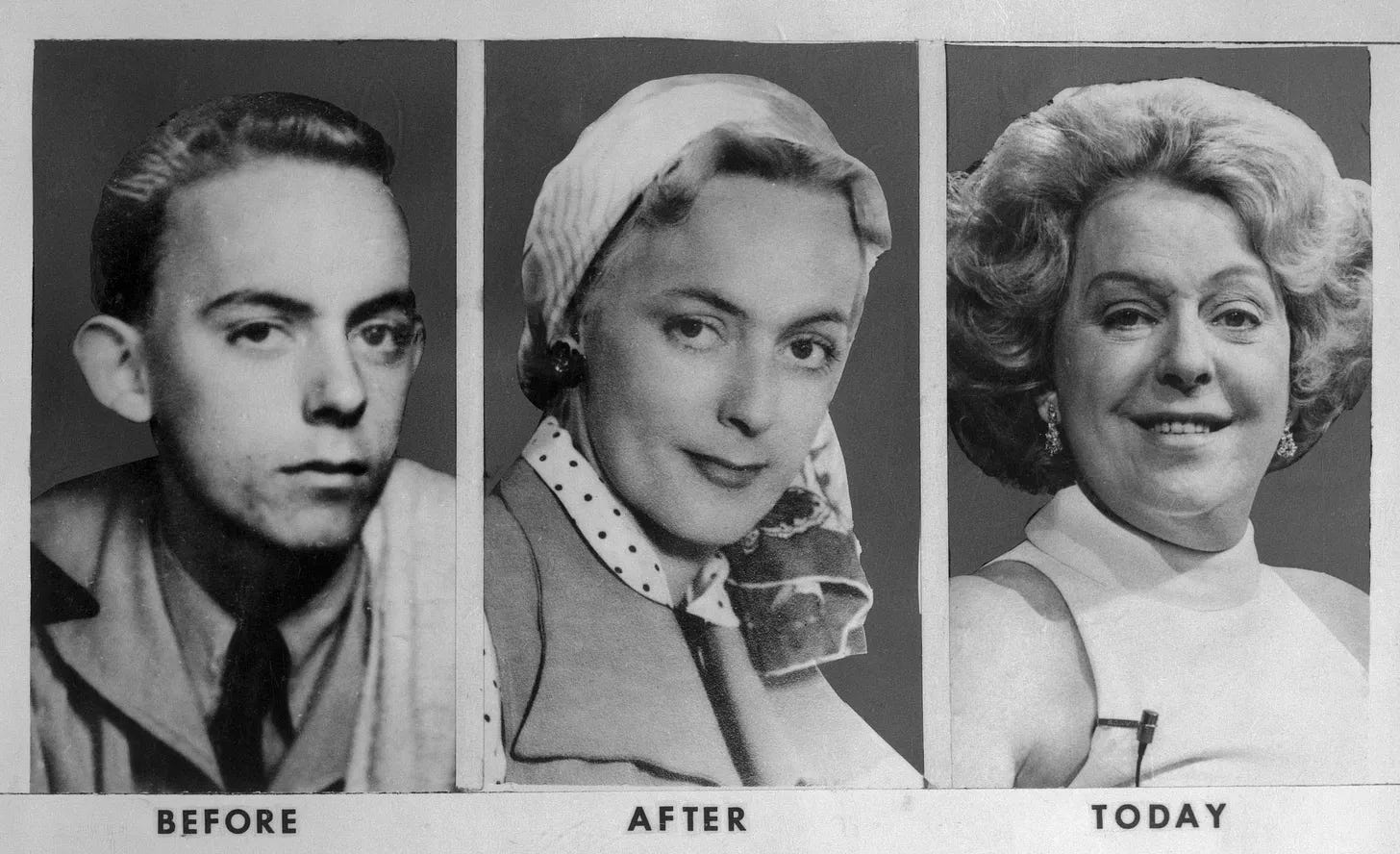
The country’s understanding of trans identity changed fastest after 1952, when Christine Jorgensen became the first American to become a household name for gender-affirming surgery. The New York Daily News ran the story on its Dec. 1, 1952, front page: “Ex-GI Becomes Blonde Beauty: Bronx Youth Is a Happy Woman After Medication, 6 Operations.” Jorgensen’s surgeries had actually begun the year before, in Copenhagen.
That visibility built infrastructure. Virginia Prince launched Transvestia magazine in 1960, giving readers a place to share their experiences for the first time. Reed Erickson, a wealthy trans man, founded the Erickson Educational Foundation in 1964, funding counseling services and the first three International Symposiums on Gender Identity. In 1965, psychiatrist John F. Oliven coined the term “transgender” in his book “Sexual Hygiene and Pathology.” A year later, Johns Hopkins University opened the first Gender Identity Clinic in the country, where a team of 10 physicians and psychologists provided gender-affirming care, including surgery, to trans Americans.
That same year, in August 1966, trans women and drag queens fought back against police harassment at Compton’s Cafeteria in San Francisco’s Tenderloin neighborhood, a riot that predates Stonewall by nearly three years and is often left out of mainstream timelines entirely. In direct response, Conversion Our Goal launched in 1967, later becoming the Transsexual Counseling Unit, giving trans people in San Francisco a critical point of contact for medical care.
Stonewall and STAR Turned Trans Survival Into Trans Organizing
Police raided the Stonewall Inn in 1969, sparking days of resistance from New York City’s LGBTQ community. Accounts of exactly how many days the unrest lasted vary by source, generally somewhere between five and six. Trans activists Marsha P. Johnson and Sylvia Rivera became leaders of the broader liberation movement that followed, though historians still debate the precise details of their roles on the first night itself.
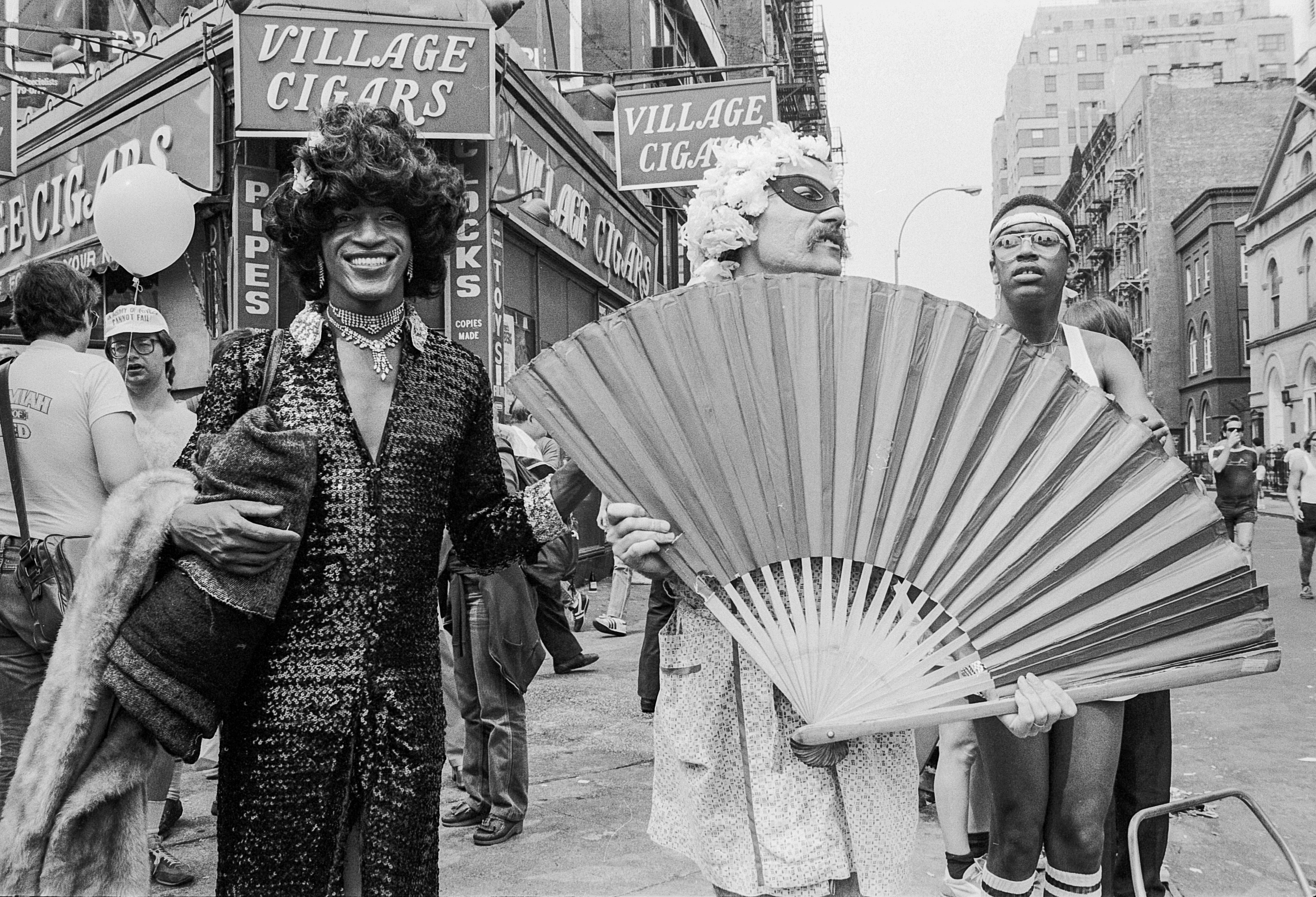
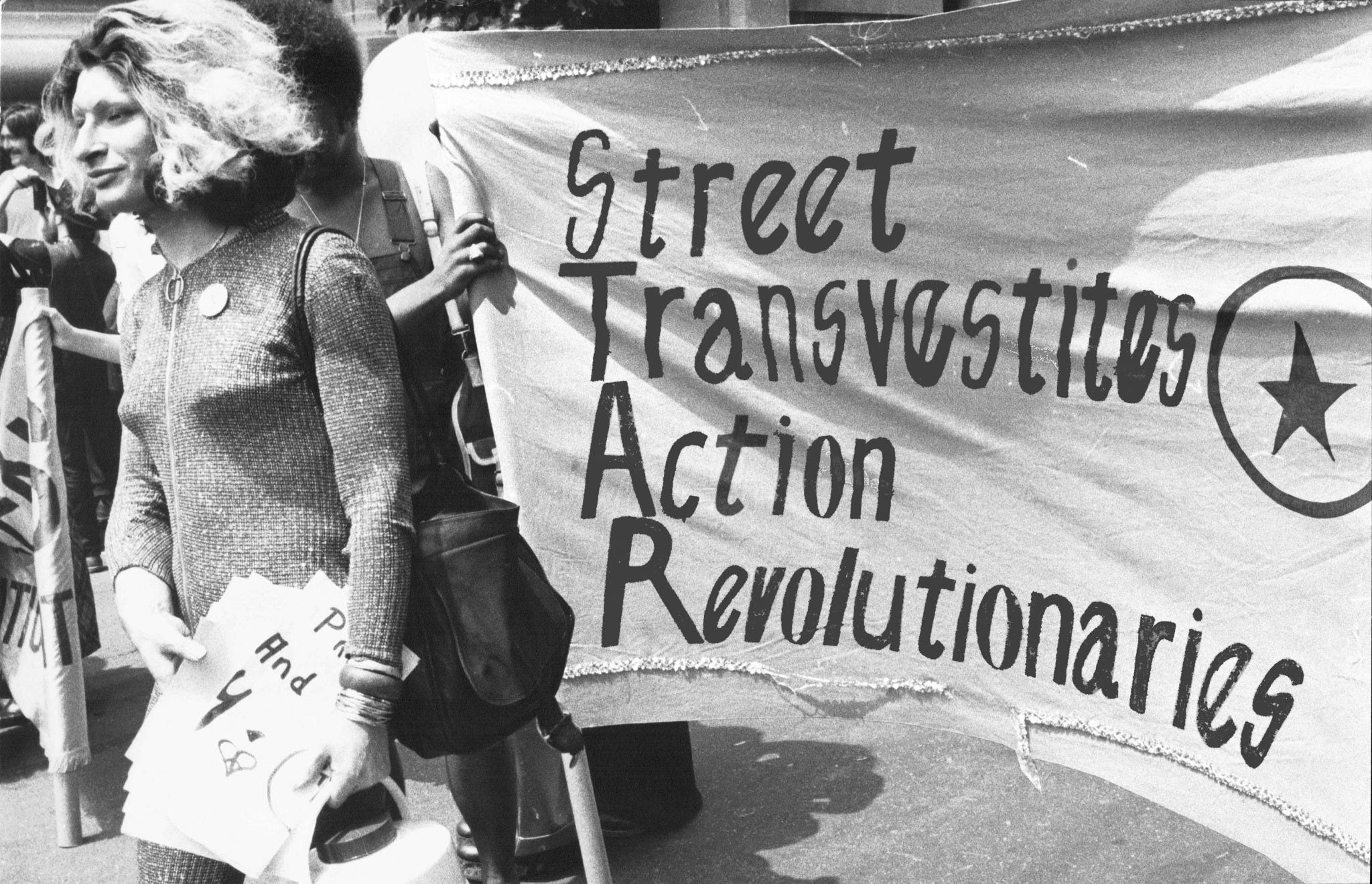
In 1970, Rivera and Johnson founded Street Transvestite Action Revolutionaries, known as STAR, to help homeless trans people find shelter. Member Bubbles Rose Lee opened STAR House that November. It closed roughly eight months later when the group couldn’t make rent.
The APA Called Being Trans a Mental Disorder for 33 Years, From 1980 to 2013
In 1980, the American Psychiatric Association classified transgender identity in the DSM as “gender identity disorder.” That classification stood for more than three decades. In the meantime, trans communities kept building their own institutions: FTM International launched in 1986 as the first organization for trans men in the U.S.; the Southern Comfort Conference held its first Atlanta gathering in 1991; and Riki Wilchins formed GenderPAC in 1995, the first national political advocacy group focused on gender identity rights.
1999 brought three lasting milestones. Gwendolyn Ann Smith held the first Transgender Day of Remembrance on Nov. 20, a vigil for Rita Hester, a trans woman murdered the year before. Monica Helms, a trans veteran, created the Transgender Pride Flag, using pink and blue for the colors traditionally associated with girls and boys, and white for people who are intersex, transitioning, or don’t fit the binary. And the National Transgender Advocacy Coalition formed to lobby lawmakers directly on transgender Americans’ behalf.
The DSM finally dropped “gender identity disorder” in 2013, replacing it with “gender dysphoria,” a change the APA said refocused the diagnosis on distress some trans people experience rather than treating trans identity itself as the disorder.
Gwen Araujo’s Murder and Laverne Cox’s TIME Cover Marked Two Different Kinds of Visibility
Gwen Araujo, a 17-year-old trans girl, was murdered in 2002. Her killers’ defense attorneys argued she deceived them by not disclosing she was trans, a version of the “trans panic” defense. The first trial ended in a hung jury; a second trial convicted two men of second-degree murder. California responded in 2006 with the Gwen Araujo Justice for Victims Act, barring juries from basing verdicts on a victim’s gender identity or sexual orientation.
Representation kept expanding through the next decade. Dylan Orr became the first openly transgender person appointed to a presidential administration role in 2009, at the U.S. Department of Labor. The first International Transgender Day of Visibility took place on March 31, 2010, founded by Rachel Crandall of Transgender Michigan; that same year, Victoria Kolakowski became the first openly transgender trial court judge of general jurisdiction, elected in Alameda County, California.
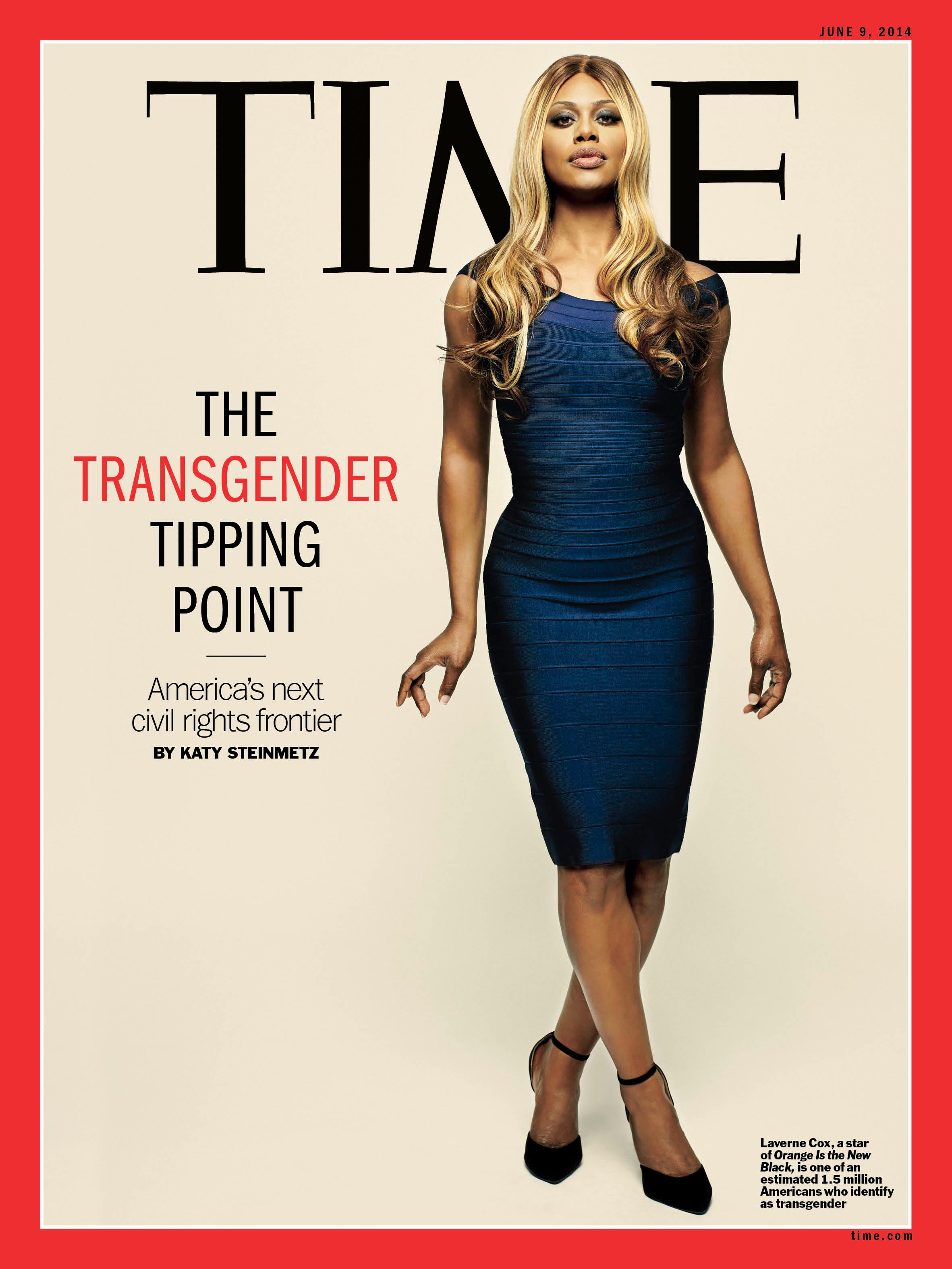
By 2014, Laverne Cox appeared on the cover of TIME for “The Transgender Tipping Point.” “We are in a place now where more and more trans people want to come forward and say, ‘This is who I am,’” Cox told the magazine.
North Carolina’s Bathroom Bill Opened a Decade of Escalating Backlash
2016 cut in two directions at once. North Carolina passed the first U.S. transgender bathroom ban, requiring people to use the restroom matching the sex on their birth certificate; boycotts followed, projected to cost the state $3.76 billion. The same year, Defense Secretary Ashton Carter announced that “otherwise qualified service members can no longer be involuntarily separated, discharged or denied reenlistment or continuation of service just for being transgender.” That policy lasted about a year. In 2017, President Trump announced by tweet that “the United States Government will not accept or allow ... transgender individuals to serve in any capacity in the U.S. Military.”
The 2020 murder of George Floyd sparked outrage that spilled into trans rights organizing too. The Brooklyn Liberation March that June drew an estimated 15,000 people, becoming the largest trans rights demonstration in U.S. history, with a specific focus on police violence against Black transgender people.
Sarah McBride’s Historic Win in 2024 Triggered a Bathroom Fight in Congress Within Weeks
Sarah McBride won Delaware’s at-large U.S. House seat on Nov. 5, 2024, with 57.9% of the vote, becoming the first openly transgender person elected to Congress. She’d previously become the first openly trans state senator in the country, elected in Delaware in 2020.
Her win came during a campaign season defined partly by how much money Republicans spent attacking transgender people. Broadcast television ad-tracking from AdImpact, analyzed by Uncloseted Media, put spending on anti-trans ads during the 2024 cycle at roughly $215 million, more than twice what Trump’s campaign spent on immigration ads and more than five times what it spent on ads about the economy. That figure covers broadcast and network TV only; it doesn’t include cable or streaming spending, meaning the real total was almost certainly higher.
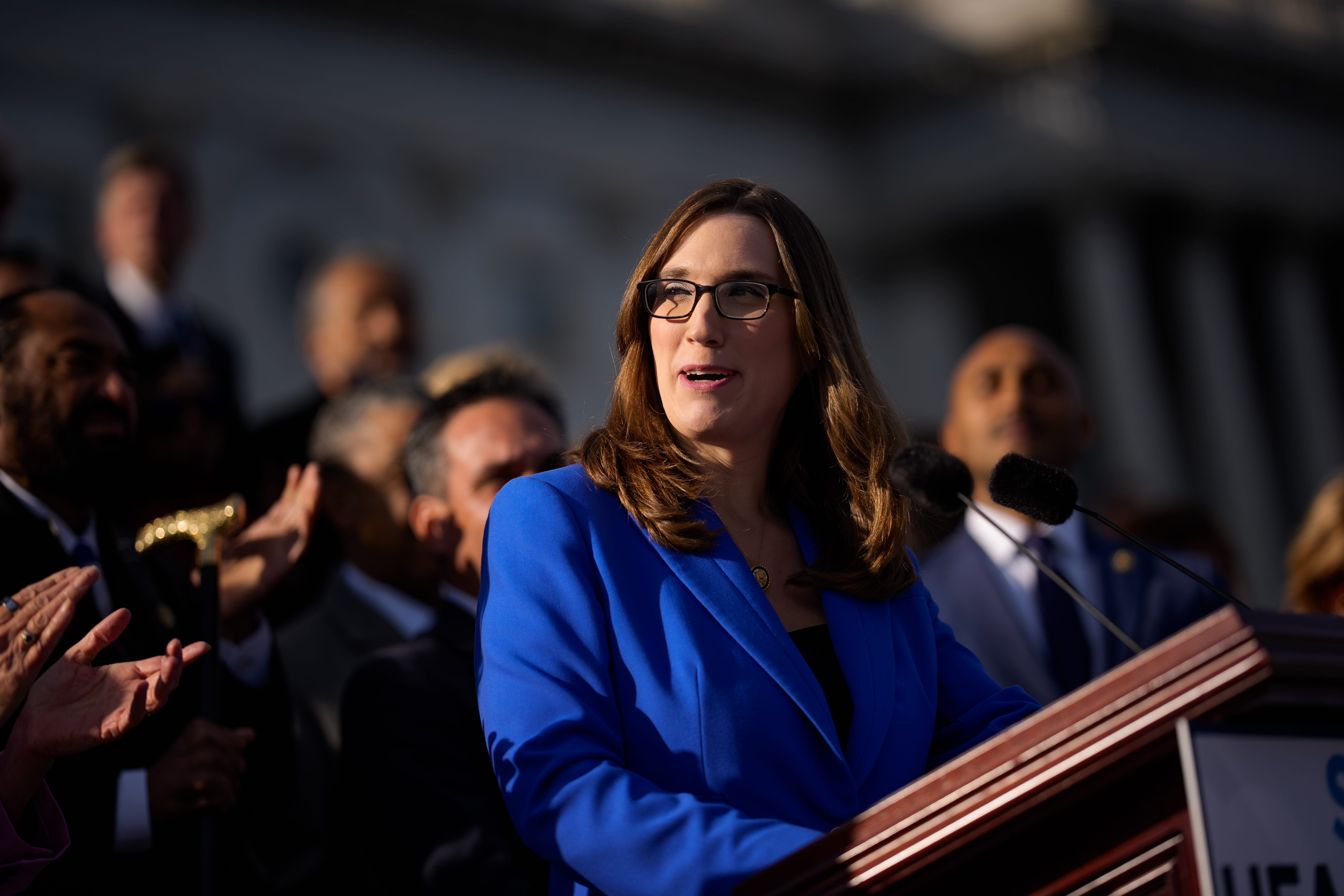
The backlash to McBride’s win reached Congress almost immediately. Rep. Nancy Mace introduced a resolution on Nov. 18, 2024, two weeks before McBride was sworn in, seeking to bar her from Capitol restrooms matching her gender. Rather than force a floor vote, Speaker Mike Johnson preempted it with his own directive, then quietly inserted a bathroom restriction into the Congressional Record on Jan. 3, 2025, using his authority as speaker instead of putting it to a House vote.
Trump’s 2025 Executive Orders Targeted Trans Passports, Health Care and Military Service
Since retaking office in January 2025, the Trump administration has moved on trans Americans faster than any previous administration, on multiple fronts simultaneously.
On his first day back, Trump signed Executive Order 14168, defining sex under federal law as fixed at conception and recognizing only male and female. Agencies including the Office of Personnel Management and Department of Health and Human Services have implemented it since. That same order became the basis for a new State Department passport policy rejecting gender markers that don’t match a person’s sex “at conception.” A federal judge blocked that passport policy with a preliminary injunction in the case Orr v. Trump in June 2025; the Supreme Court granted the government a stay on Nov. 6, 2025, meaning the restrictive policy remains in effect while the underlying lawsuit continues.
A separate executive order, EO 14187, conditions federal funding on institutions ending gender-affirming care for anyone under 19. A federal judge blocked that order nationwide in February 2025 in Washington v. Trump, and it remains blocked as of this writing while an appeal sits before the 9th Circuit. That federal block doesn’t mean gender-affirming care for trans minors is protected everywhere, though. In June 2025, the U.S. Supreme Court ruled 6-3 in United States v. Skrmetti that states can ban that same care outright under their own laws, upholding a Tennessee ban and clearing the way for similar state bans to stand. Whether a trans teenager can access care today depends heavily on which state they live in.
The administration’s ban on transgender military service has followed a similar, contradictory path through the courts. After Trump signed EO 14183, the Pentagon moved to separate transgender troops from service. In May 2025, the Supreme Court stayed a lower court’s injunction in Shilling v. Trump, letting the ban take effect nationwide while litigation continues. More than a year later, on June 1, 2026, the U.S. Court of Appeals for the D.C. Circuit ruled in Talbott v. United States that the ban likely violates the constitutional rights of transgender troops already serving. That ruling protects only the named plaintiffs in that specific case; the broader ban remains in effect for transgender service members nationwide.
New Jersey’s Shield Law and 800-Plus State Bills Show Where Things Stand in 2026
More than 800 anti-trans bills are active or pending across 43 states this year, according to the Trans Legislation Tracker, which has followed the issue since 2015. Other trackers, including the ACLU’s, count differently and report lower totals because they define “anti-trans” and “anti-LGBTQ” bills differently; there’s no single agreed-upon number, but every tracker shows the same trend. Bill counts stayed relatively low and flat through the late 2010s, then climbed sharply starting in 2020, from roughly 91 bills that year to more than 1,000 in 2025, the steepest sustained increase the tracker has recorded.
“What is relatively new is, over the past five to six years, we’ve seen a really dramatic escalation,” Logan Casey, director of policy research at the Movement Advancement Project, said in February 2026.
Not every recent development has gone against trans Americans. New Jersey’s legislature passed a bill in late June 2026 protecting both patients and providers of gender-affirming and reproductive care from out-of-state legal interference, including extradition attempts and civil suits tied to care that’s legal in New Jersey. It also bars protesters from obstructing clinic entrances. The bill passed the Assembly 55-23 on June 30 and awaits Gov. Mikie Sherrill’s signature; once signed, New Jersey becomes the last Democratic-controlled state to adopt this kind of shield law, following a wave of similar laws in other blue states.
That’s the country trans Americans are navigating heading into the second half of 2026: a federal government that named their existence in a counterterrorism strategy, courts delivering mixed and often narrow rulings, and state legislatures pulling in opposite directions depending on who controls them. None of it is new in kind. The scale of it is.
Track the Bills in Your State, and Subscribe for What Comes Next
Trans rights in America didn’t start with this administration, and the fight over them won’t end with it either. If you want the reporting that keeps tracking the bills, the court rulings, and the people organizing against both, subscribe to The Queer Agenda. If you’re in a state without a shield law like New Jersey’s, the Trans Legislation Tracker shows exactly what’s moving where you live, and most statehouses make it easy to find and contact your own representatives about specific bills.
Sources
The White House, “2026 United States Counterterrorism Strategy,” May 6, 2026.
Washington Blade, “White House counterterrorism strategy targets ‘anti-American, radically pro-transgender’ groups,” May 11, 2026.
New York Public Library and New York Historical Society, records on Jemima Wilkinson and Lucy Ann Lobdell.
Smithsonian Institution, records on Mary Jones and H.R. Robinson’s “The Man-Monster” lithograph, 1836.
The Revised Ordinances of the City of St. Louis, 1843.
National Women’s History Museum, biography of We’Wha.
Library of Congress, Stonewall-era research guide and Reconstruction-era coverage referencing Frances Thompson’s 1866 testimony.
The New York Times, coverage of Murray Hall’s death, January 1901.
Dr. Joshua Allen Gilbert, “Homosexuality and Its Treatment,” on Dr. Alan Hart’s 1917 surgery.
New York Daily News, “Ex-GI Becomes Blonde Beauty,” Dec. 1, 1952; Wikipedia retrospective on Christine Jorgensen.
University of Victoria Transgender Archives, Transvestia and FTM International newsletter collections.
American Psychiatric Association, DSM classification history, 1980 and 2013.
Smithsonian Institution, “Marsha P. Johnson, Sylvia Rivera, and the History of Pride Month”.
Wikipedia and Village Preservation, Street Transvestite Action Revolutionaries and STAR House.
Wikipedia, Compton’s Cafeteria riot and the National Transsexual Counseling Unit (formerly Conversion Our Goal).
Wikipedia, timeline of the murder of Gwen Araujo, 2002-2006.
TIME, “The Transgender Tipping Point,” June 2014.
U.S. Department of Defense, Secretary Ashton Carter announcement on transgender service, June 2016.
The Associated Press, analysis of HB2’s projected economic impact on North Carolina, March 2017.
ABC News, Sarah McBride election results, November 2024.
Uncloseted Media, analysis of 2024 anti-trans campaign ad spending.
The Washington Post, coverage of Rep. Nancy Mace’s Capitol bathroom resolution, November 2024.
The White House, Executive Order 14168, Jan. 20, 2025.
ACLU, case page for Orr v. Trump and coverage of the Supreme Court’s Nov. 6, 2025 stay.
KFF, litigation tracker for Washington v. Trump on the youth gender-affirming care executive order, 2025-2026.
Supreme Court of the United States, United States v. Skrmetti opinion, June 18, 2025.
Lambda Legal, coverage of Shilling v. Trump and the Supreme Court’s May 2025 stay.
U.S. Court of Appeals for the D.C. Circuit, Talbott v. United States opinion, June 1, 2026.
Trans Legislation Tracker, 2026 bill count and historical year-by-year data.
Williams Institute, UCLA School of Law, “Anti-Trans Legislation” report, January 2026.
Movement Advancement Project, Logan Casey statement via Truthout, Feb. 14, 2026.
New Jersey Monitor, coverage of New Jersey’s health care shield bill, June-July 2026.
Thanks for the sweeping history of trans rights and history. This is great stuff!